͏ ͏ ͏ ͏ ͏ ͏ ͏ ͏ ͏ ͏ ͏ ͏ ͏ ͏ ͏ ͏ ͏ ͏ ͏ ͏ ͏ ͏ ͏ ͏ ͏ ͏ ͏ ͏ ͏ ͏ ͏ ͏ ͏ ͏ ͏ ͏ ͏ ͏ ͏ ͏ ͏ ͏ ͏ ͏ ͏ ͏ ͏ ͏ ͏ ͏ ͏ ͏ ͏ ͏ ͏ ͏ ͏ ͏ ͏ ͏ ͏ ͏ ͏ ͏ ͏ ͏ ͏ ͏ ͏ ͏ ͏ ͏ ͏ ͏ ͏ ͏ ͏ ͏ ͏ ͏ ͏ ͏ ͏ ͏ ͏ ͏ ͏ ͏ ͏ ͏ ͏ ͏ ͏ ͏ ͏ ͏ ͏ ͏ |
|
|
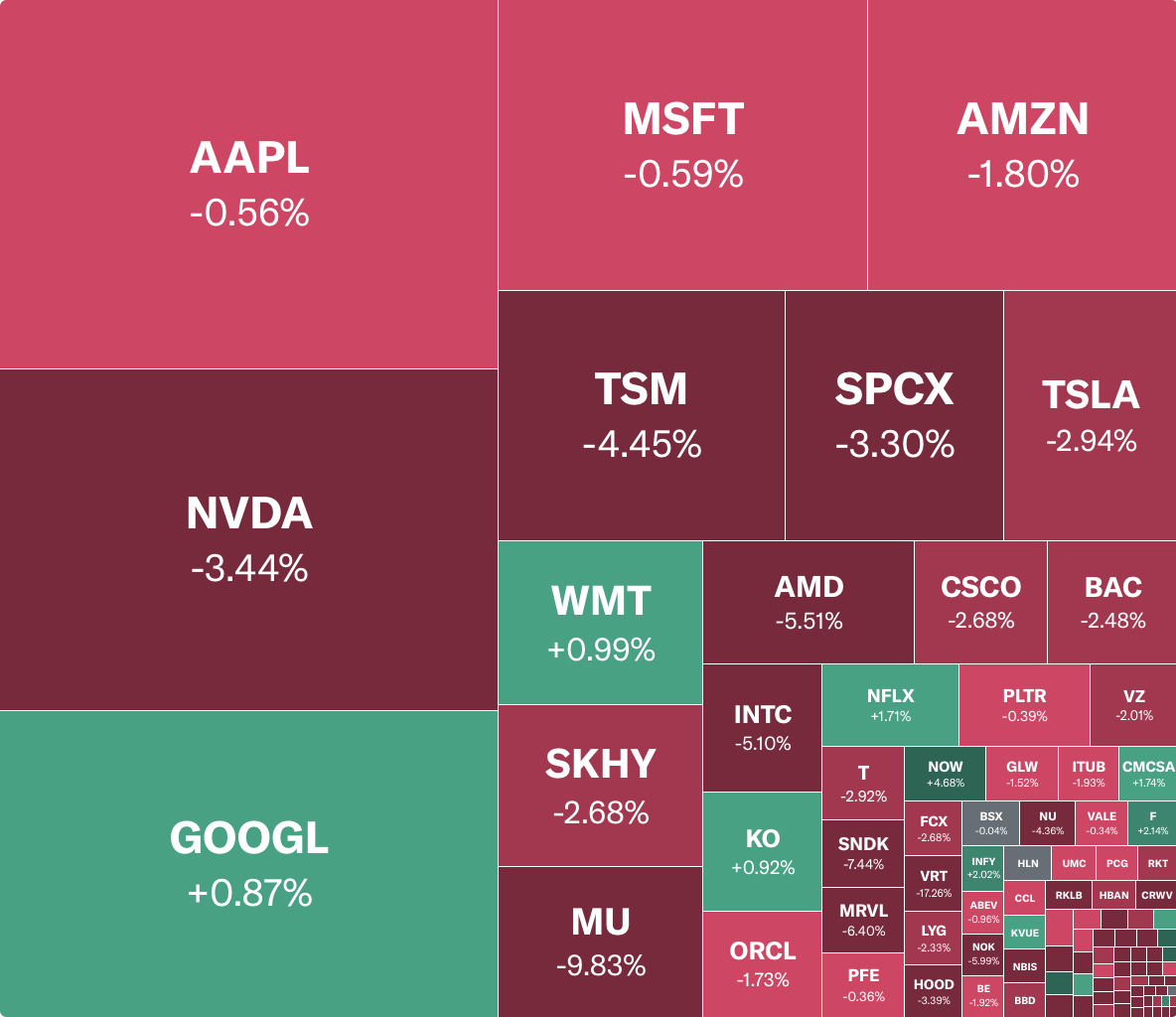
Good morning! After the Fed and double Big Tech earnings, we have at least some answers. Not necessarily ones the market wanted. Stocks sank before the Fed press conference, surged, and then plunged even deeper to close the day on a sour note as Warsh's credibility to tame inflation stung. The S&P 500 (^GSPC) fell 1.5% on Wednesday, the Dow (^DJI) 2.2%, and the Nasdaq (^IXIC) 1.7%. Meanwhile, escalation with Iran reignited oil prices, which climbed over 7% to put Brent barrels back into the $90s. |
- Meta and Microsoft post two very different quarters
- The Warsh Fed delivers many dissents and few answers
- The S&P 500 doesn't need chips to have a good time
- The chip stock crash is teaching a very expensive market lesson
|
What we're watching Thursday: Two more Big Tech Titans await, with Apple (AAPL) (preview here) and Amazon (AMZN) (preview here) earnings coming after the bell. Besides those two, we'll be looking out for Mastercard (MA), Anheuser-Busch InBev (BUD), Yum! Brands (YUM), Stellantis (STLA), and plenty more. On the economic side, Personal Consumption Expenditures and Q2 GDP will join weekly jobless claims. |
|
|  | Headlines | |
|
|
 | Market snapshot Key market moves from last session | |
| Powered by  See the bigger picture. See the bigger picture. | |
|
|
Meta and Microsoft post two very different quarters |
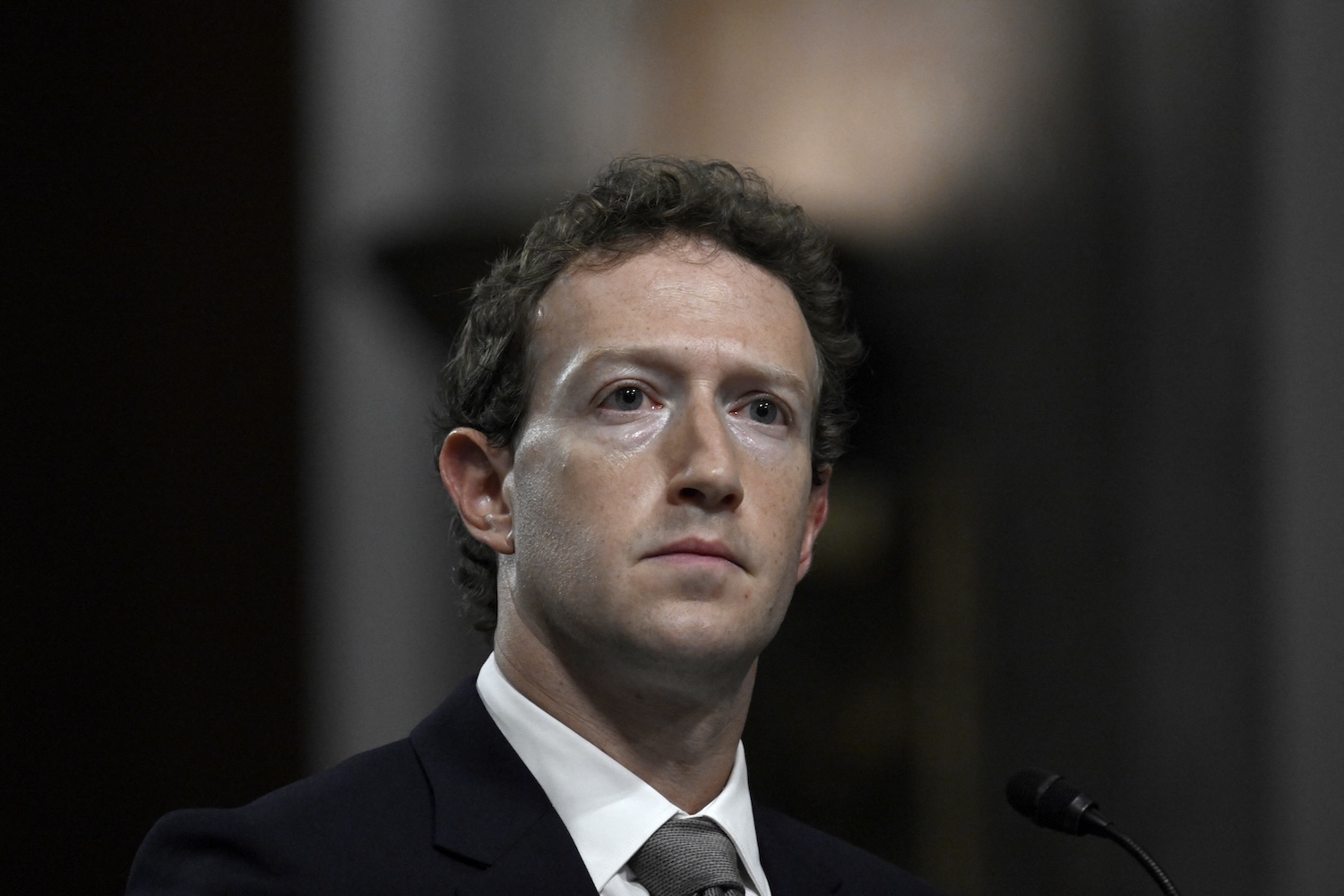
Meta CEO Mark Zuckerberg before the Senate in 2024. (ANDREW CABALLERO-REYNOLDS/AFP via Getty Images) |
With Microsoft and Meta's books now open, it's four down, three to go for Big Tech's Q2 season. For the big "M" companies, it was a split decision. Though Meta beat on revenue, the company saw its free cash flow nearly evaporate like Google's, fueling AI cost concerns. (Unlike Google's, it did stay positive, though.) It also posted lower earnings per share compared to expectations. The company, which has hiked its spending plans considerably — and many times — did so again, but "only" by $5 billion, bringing its yearly capex budget to $130 billion. Just how much that bothers investors will be a key question as they digest the results. After-hours trading saw a sharp move to the downside. But against that backdrop was also a lower-than-expected revenue outlook, which will hurt the company that's trying to show that its gambles are paying off. Microsoft, on the other hand, made money by spending less and making more. The company beat its estimates, with profits jumping 31% and its Azure cloud segment posting more than $100 billion in revenue for the first time, while keeping capex investments for the year under the expected $42 billion budget. We'll see which company gets rewarded in the markets today. |
|
|
The Warsh Fed delivers many dissents and few answers |
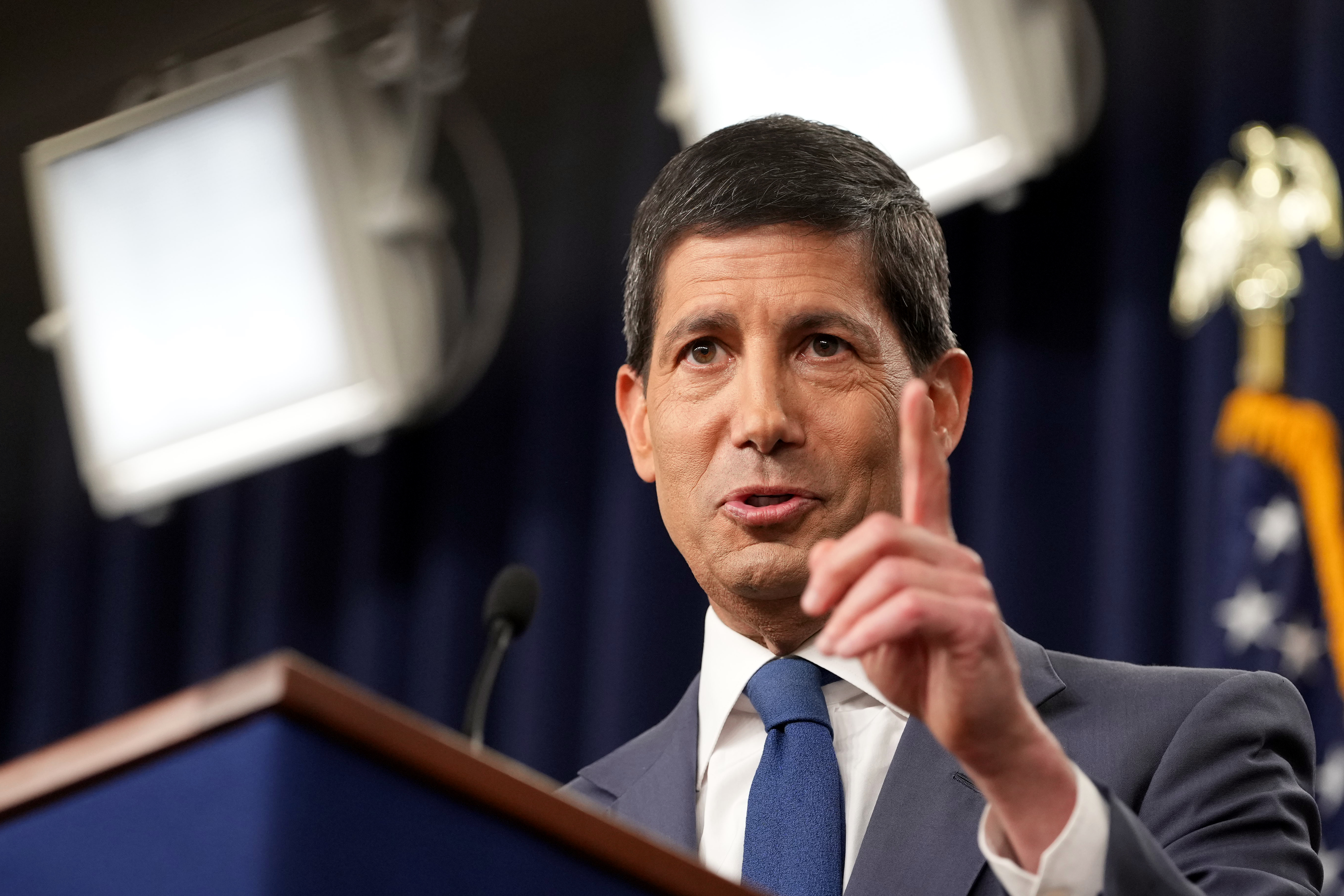
Federal Reserve Board Chairman Kevin Warsh speaks during a news conference at the Federal Reserve in Washington, Wednesday, July 29, 2026. (AP Photo/Mark Schiefelbein) |
The Fed held interest rates steady on Wednesday, and the vote showed why that was by no means a sure thing. Nine members voted to hold, with three favoring a hike, up from last meeting's zero. (Three is a lot.) The overall message was a "hawkish hold," with almost all of the discourse focused on "elevated" prices and a commitment to bringing inflation to heel. Investors didn't seem to appreciate it, and stocks sold off into the close. In the sparse statement and then later in the press conference, investors parsed the tea leaves in an effort to get to know Chairman Kevin Warsh a little better. The task may be a tough one. The division within the Fed is clear, and the same could be said of Warsh himself, as he tried to project hawkishness amid his vote. For example, he quipped, "I wouldn't characterize what we did today like a pause," cited a direct commitment to the 2% inflation target, and noted the need for people to truly believe and expect that the Fed would deliver this and would hike if it felt it was needed. (Warsh also noted the bond market has been doing some of the Fed's work for it.) But the press conference had an air of confusion as the financial media probed for answers and understanding of Warsh's philosophy. There weren't many answers to be had, even in a "wait and see" sense. Warsh even suggested fighting inflation and helping the labor market — the two sides of the Fed's mandate — weren't actually at odds, in contrast to economic orthodoxy. At least two questions were prefaced by statements like "I'm confused" and "I need a little help here." The markets may also find themselves needing some more help. |
|
|
The S&P 500 doesn't need chips to have a good time |
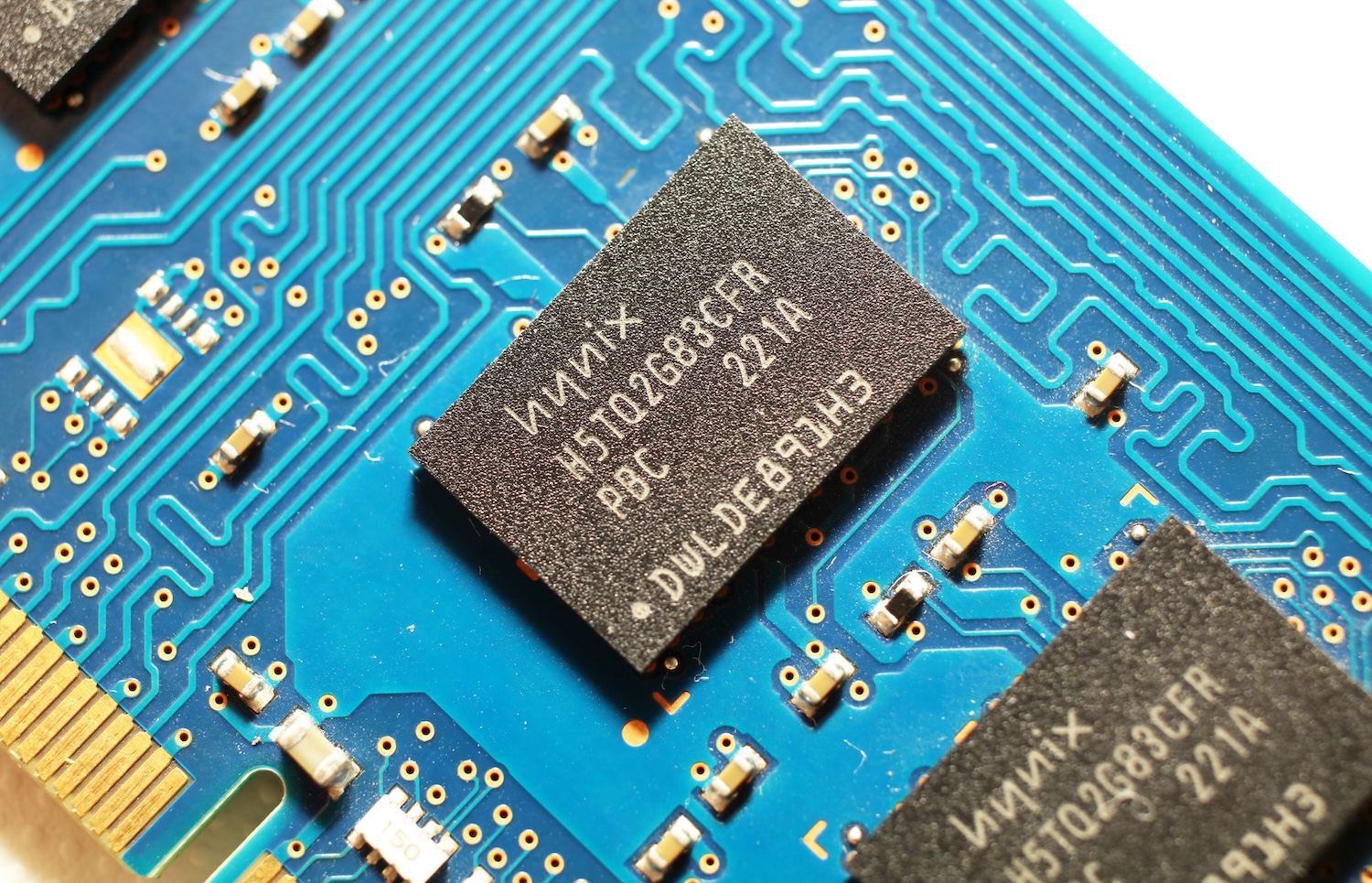
DDR laptop memory modules and memory chips produced by SK Hynix are displayed on June 6, 2026 in Shanghai, China. (VCG/VCG via Getty Images) |
The chip side of the AI trade continued to unwind on Wednesday as semiconductors found themselves even deeper in the red. Results from SK Hynix failed to wow investors, and GPU, CPU, and memory chipmakers from Nvidia to Micron dropped. It's no secret that these chipmakers have picked up where the Magnificent Seven left off, with this distinct branch of the AI trade grabbing the reins. But it's worth noting that the S&P 500 has hardly batted an eye. Though there may be double-digit churning within its components, the S&P 500 is living its own life. The reason, as our Executive Editor Brian Sozzi pointed out, is that around 72% of S&P 500 companies are trading above their 200-day average. This notable broadening is even something to celebrate, as it's the strongest since December 2024. As Schwab's Kevin Gordon put it, "that's relatively healthy." |
|
|
The chip stock crash is teaching a very expensive market lesson |
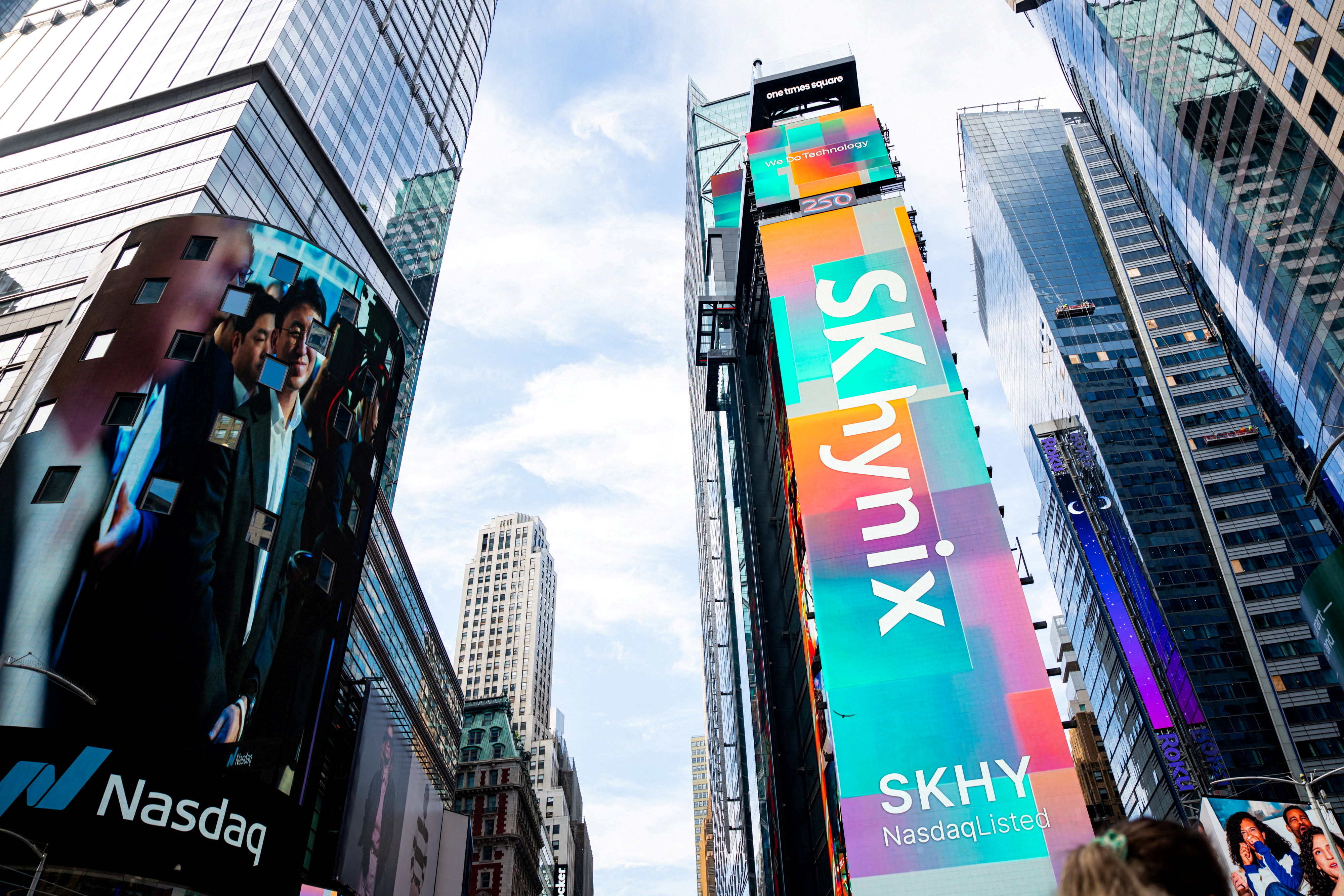
An advertisement featuring Semiconductor and memory chip company SK Hynix on the side of a building during the company's debut at the Nasdaq market in New York City, U.S., July 10, 2026. (REUTERS/Angelina Katsanis/File Photo) |
It's a beautiful thing for someone holding the S&P 500 to see heavy action in certain corners of the market, like chips, log on to their portfolio accounts, and see that things are actually pretty fine. Though the AI trade has powered much of the gains, the keel is at least somewhat even when you have 500 companies in an index. For a committed investor with a big chip thesis, owning the iShares Semiconductor ETF (SOXX) would give you a different experience, but still positive. Tough as the past month has been, it's still up 51% this year. But things get wild at the next level of concentration: leverage. There's an ETF for anything these days, and investor exposure to levered ETFs is near record highs. The Direxion Daily Semiconductor Bull 3X Shares (SOXL) is one way to bet big on chips, essentially magnifying exposure by a factor of three. As our Jared Blikre notes, that 25% rout in semiconductors since June 22 would show up as a 63% loss in that levered ETF. Besides the diversity lesson this might teach, there's another one that explains why it's not down even further. An ETF like this isn't just a magnifier of long-term movements; it resets every day, making the trade hard to even wrap your brain around — even if you read the fine print. |
|
|
 | Earnings and economic calendar | |
- Economic data: Personal income, June (+0.3% expected, +0.7% previously); Personal spending, June (+0.4% expected, +0.7% previously); PCE price index, month-on-month, June (-0.1% expected, +0.4% previously); PCE price index, year-on-year, June (+3.6% expected, +4.1% previously); Core PCE price index, month-on-month, June (+0.1% expected, +0.3% previously); Core PCE price index, year-on-year, June (+3.3% expected, +3.4% previously); Initial jobless claims, week ended July 25 (187,000 previously); Continuing claims, week ended July 18 (1.796 million previously); GDP annualized, quarter-on-quarter, second quarter (+2.3% expected, +2.1% previously).
- Earnings calendar: Apple (AAPL), Amazon.com (AMZN), Mastercard (MA), Shell (SHEL), Anheuser-Busch InBev (BUD), Mizuho Financial Group (MFG), British American Tobacco (BATS.L), Bristol-Myers Squibb (BMY), Stryker Corporation (SYK), Altria Group (MO), The Southern Company (SO), Valero Energy Corporation (VLO), Lloyds Banking Group (LYG), KKR (KKR), Intercontinental Exchange (ICE), The Cigna Group (CI), American Electric Power Company (AEP), Monolithic Power Systems (MPWR), Regeneron Pharmaceuticals (REGN), Ferrari N.V. (RACE), Yum! Brands (YUM), The Hershey Company (HSY), Strategy (MSTR), Roblox Corporation (RBLX).
|
- Economic data: MNI Chicago PMI, July (56.7 previously); U. Mich. sentiment, July final reading (54.4 previously); U. Mich. current conditions, July final reading (54.9 previously); U. Mich. expectations, July final reading (54 previously); U. Mich. 1-year inflation, July final reading (+4.2% previously); U. Mich. 5-10 year inflation, July final reading (+3.3% previously).
- Earnings calendar: ExxonMobil (XOM), Chevron (CVX), AbbVie (ABBV), Linde (LIN), Eaton Corporation (ETN), Sony Group (SONY), Colgate-Palmolive (CL), Imperial Oil (IMO.TO), Dominion Energy (D), Cameco Corporation (CCJ), Cboe Global Markets (CBOE), Fortis (FTS), Ares Management Corporation (ARES), T. Rowe Price Group (TROW), Moderna (MRNA), AutoNation (AN).
|
|
|
Yahoo Finance App: Portfolio performance, news and alerts, stock data and all you need in a finance app. Download now. |
|
|
If you like what we do, please forward us to a friend. If you're not already subscribed, sign up right here. |
|
|
|