͏ ͏ ͏ ͏ ͏ ͏ ͏ ͏ ͏ ͏ ͏ ͏ ͏ ͏ ͏ ͏ ͏ ͏ ͏ ͏ ͏ ͏ ͏ ͏ ͏ ͏ ͏ ͏ ͏ ͏ ͏ ͏ ͏ ͏ ͏ ͏ ͏ ͏ ͏ ͏ ͏ ͏ ͏ ͏ ͏ ͏ ͏ ͏ ͏ ͏ ͏ ͏ ͏ ͏ ͏ ͏ ͏ ͏ ͏ ͏ ͏ ͏ ͏ ͏ ͏ ͏ ͏ ͏ ͏ ͏ ͏ ͏ ͏ ͏ ͏ ͏ ͏ ͏ ͏ ͏ ͏ ͏ ͏ ͏ ͏ ͏ ͏ ͏ ͏ ͏ ͏ ͏ ͏ ͏ ͏ ͏ ͏ ͏ |
|
|
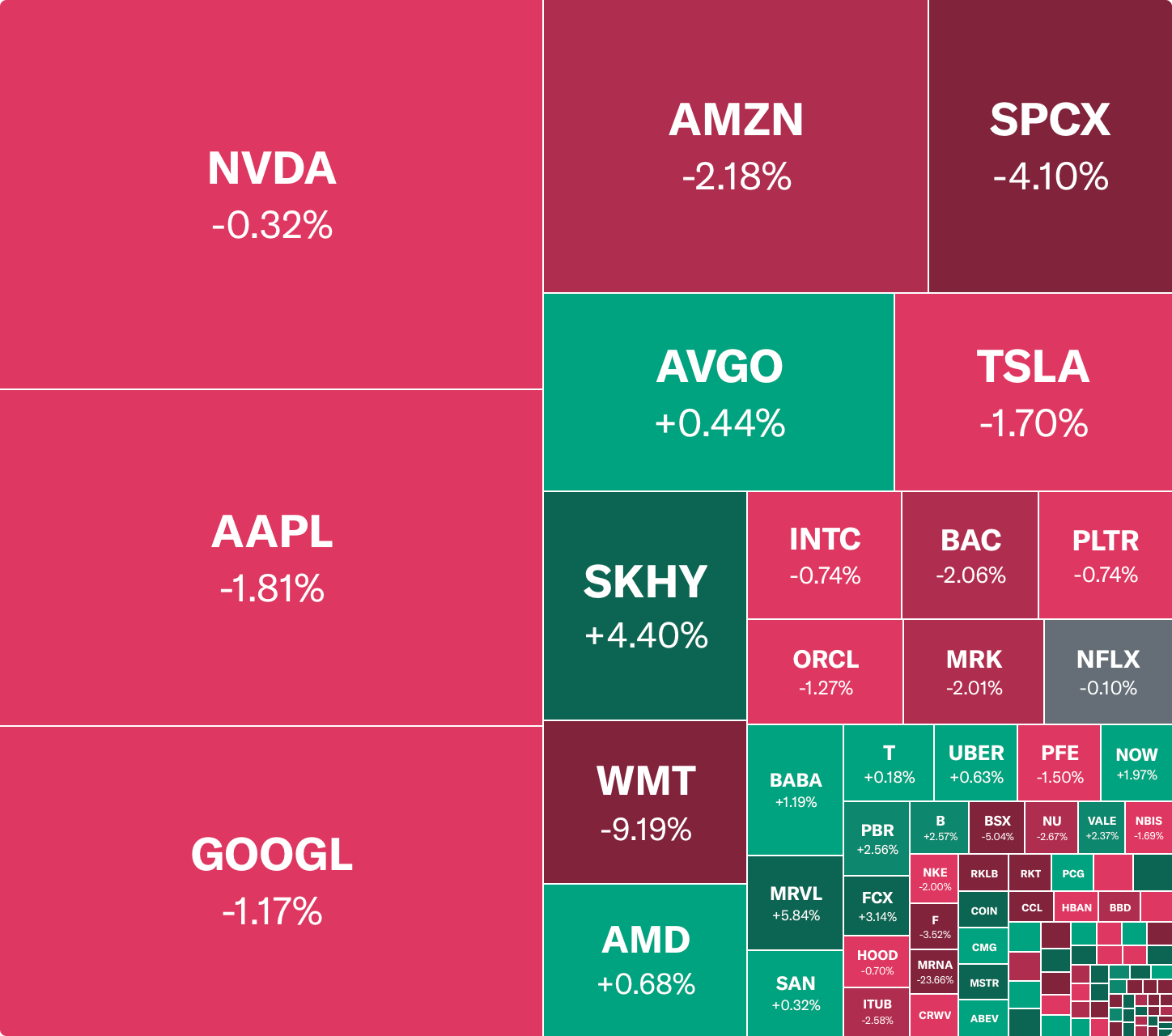
Good morning! Stocks fell on Thursday, and bond yields continued their climb, resisting a surprise intervention by the US Treasury to expand purchasing of long-term government debt. The S&P 500 (^GSPC) lost roughly 0.9% and the Dow (^DJI) gave up 1.3%, while the Nasdaq (^IXIC) shed 1%. The 30-year yield (^TYX) increased by 4 basis points to 5.24%. And bitcoin (BTC-USD) surged above the $70,000 level for the first time since early June. |
- More Treasury buybacks reflect their limits to lower yields
- The national debt crosses an ominous milestone
- SpaceX’s big investor test is still around the corner
- Is the crypto winter starting to thaw?
|
What we're watching Friday: Details on President Trump's plans to squeeze Iran economically are expected in the coming days, alongside data on manufacturing. The S&P Global US manufacturing PMI for August is projected to show an expansion, roughly in line with the prior month. And results from BJ's Wholesale Club Holdings (BJ) will round out a week of mixed retail earnings. |
|
|
 | Headlines | |
|
|
 | Market snapshot Key market moves from last session | |
| Powered by  See the bigger picture. See the bigger picture. | |
|
|
More Treasury buybacks reflect their limits to lower yields |
Treasury Secretary Scott Bessent walks to speak to members of the media outside the White House in Washington, Thursday, Aug. 20, 2026. (AP Photo/Jacquelyn Martin) |
Much of Wall Street’s reaction to the Treasury Department’s expanded buyback program focused on the difficulty of actually keeping bond yields lower through this kind of government intervention. The strongest sign yet that the bond purchasing won’t be enough is that Treasury Secretary Scott Bessent is prepared to amplify the program again, as long-term bond yields rebounded on Thursday. The 10-year yield (^TNX) rose by 5 basis points to 4.70%, while the 30-year yield (^TYX) increased by 6 basis points to 5.25%. After he bailed out some floodwater, more poured back in. In an interview with CNBC Thursday, Bessent said the move was done in part "to show that we believe that the yields don't reflect the underlying fundamentals" and that the program could exceed the initial $4 billion in Treasury buybacks. But while the budget may increase, the reasons behind the bond sell-off aren’t so easily altered: heavy government spending, inflation, Fed policy uncertainty, and corporate borrowing. Wall Street remains skeptical that the Treasury can artificially suppress interest rates for long. And worse, the escalating maneuvers might signal government desperation. As Evercore ISI head of central banking strategy Krishna Guha said, a moderately bigger program “will have little enduring impact and could backfire if it is seen as signaling concern about the ability to fund longer-term at acceptable cost.” |
|
|
The national debt crosses an ominous milestone |
The Capitol in Washington. AP Photo/J. Scott Applewhite) | The projections from a generation ago read like fan fiction. In 2001, the federal government touted an annual surplus, and the Congressional Budget Office projected that the national debt would effectively be zero by 2009. Instead, the debt reached $10 trillion in 2008, and then quadruped over the next 18 years, punctuated by this week's dark milestone of surpassing $40 trillion in total debt. "The debt spiral is starting," warned Marc Goldwein, senior vice president at the Committee for a Responsible Federal Budget, whose group explained how a 1.2% surplus in 2001 morphed into 6% deficits that are now the norm. Historically, these levels were only seen during wars or deep recessions. The US government will run a deficit of $2.1 trillion when the fiscal year ends on Sept. 30, according to the latest projections. Simply servicing that debt now makes up 15% of all US government spending — more than the country spends on defense. Emergency “recession responses,” spending increases, tax cuts, and the wars in the Middle East are among the culprits behind the staggering debt, often approved with bipartisan support from elected leaders. |
|
|
SpaceX’s big investor test is still around the corner |
The SpaceX logo in this illustration taken June 11, 2026. REUTERS/Dado Ruvic/Illustration/File Photo |
SpaceX (SPCX) stock retreated back to its IPO price on Thursday as another tranche of shares came to the market. Roughly 319 million shares held by early employees and investors become eligible to trade, part of a staggered lockup that will release nearly 90% of SpaceX’s 13 billion shares through 2027. The stock fell 4% at the closing bell, dropping below its $135 IPO price. SpaceX’s lockup expirations will continue to play a role in the stock’s narrative and price action because there are still many more to go. And even bigger tests for the ticker are on the way. A 1.3 billion-share tranche is set to unlock around SpaceX's third quarter earnings in early November, followed by the 180-day expiration in December. CEO Elon Musk's 6.42 billion shares stay locked until June 2027, although he will presumably avoid steps to knock down the share price. He and other equity-rich executives tend to take loans on their shares when they need cash, rather than selling them outright. |
|
|
| | Popular on Yahoo Finance | |
|
|
Is the crypto winter starting to thaw? |
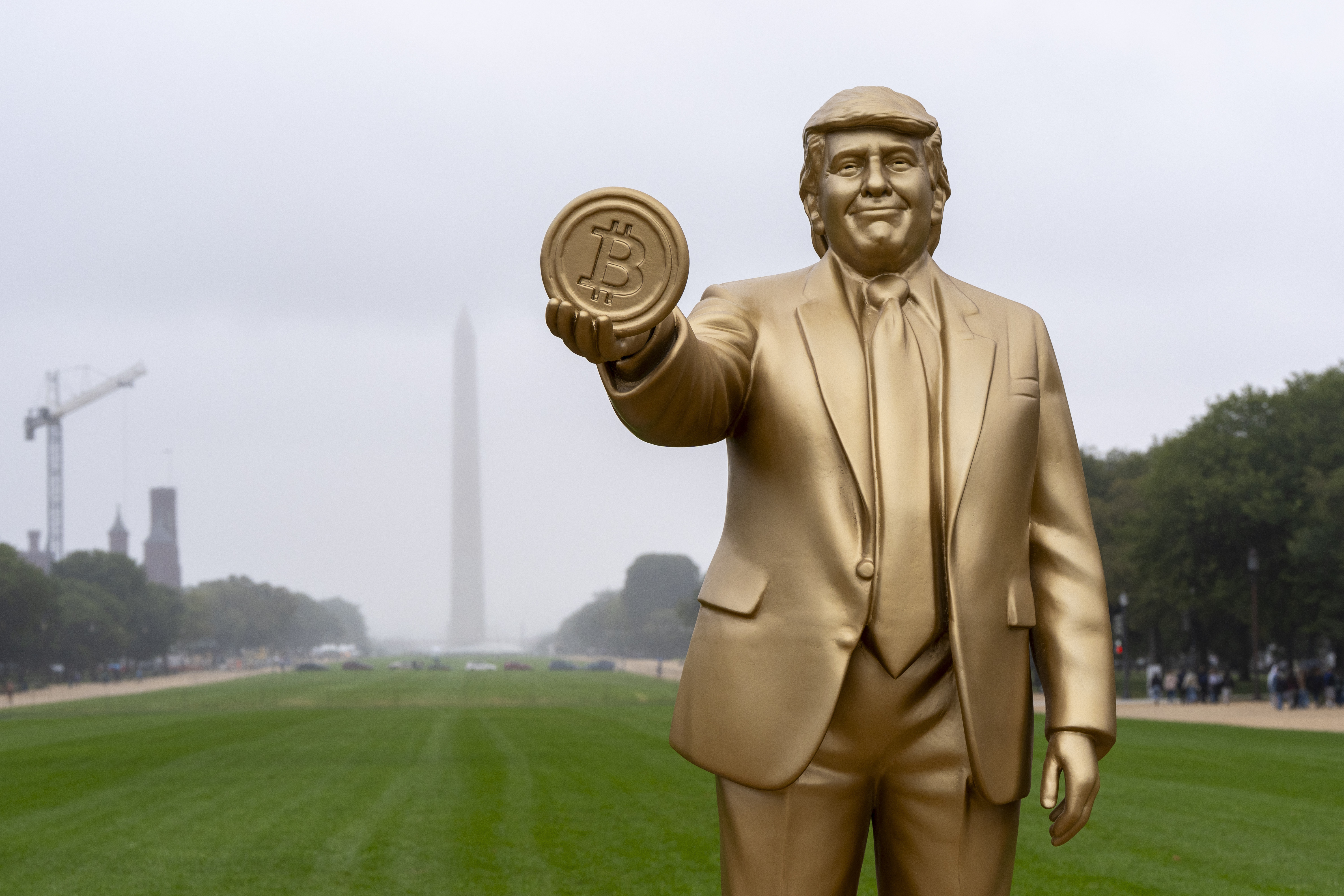
A statue of President Donald Trump holding a bitcoin in recognition of his support for cryptocurrency is displayed on the National Mall, Sept. 17, 2025, in Washington. (AP Photo/Alex Brandon) | It’s hard to tell if the crypto world has truly shaken its funk or if the recent price action is merely a false spring. But digital currency investors are, at least for the moment, rejoicing. Bitcoin (BTC-USD) on Thursday surpassed $70,000 for the first time in more than two months, buoyed, like other risk assets, by the US Treasury Department’s surprise move to buy up more long-dated government debt. Another bullish catalyst arrived from President Trump, who urged Congress to pass crypto legislation that’s widely seen as beneficial to the industry. The president has championed crypto-friendly policies while also benefiting from his family’s crypto ventures, according to disclosures. Trump’s support, and the administration’s favorable stance on the industry, have been instrumental to the bullish case for crypto. But those political alliances have also informed more bearish projections of crypto’s future. After all, if the people in power are pulling policy and PR levers to advance the crypto cause, why haven’t prices continued to climb? The same critiques point to other seemingly favorable conditions, like high government debt, geopolitical instability, and elevated inflation. These factors should be pushing crypto higher, the thinking goes, but they haven’t. The bear case is that sufficient user adoption and use cases are simply not there, and that investor interest has shifted to AI and other speculative avenues. But government policy and Trump’s lobbying have sparked excitement before. The question this time is: Will it be enough? |
|
|
 | Earnings and economic calendar | |
- Economic data: S&P Global US manufacturing PMI, August preliminary meeting (53.8 expected, 53.9 previously); S&P Global US services PMI, August preliminary meeting (53.9 expected, 54.6 previously); S&P Global US composite PMI, August preliminary meeting (54.5 previously)
- Earnings calendar: Ubiquiti (UI), BJ's Wholesale Club Holdings (BJ)
|
|
| Yahoo Finance App: Portfolio performance, news and alerts, stock data and all you need in a finance app. Download now. |
|
|
If you like what we do, please forward us to a friend. If you're not already subscribed, sign up right here. |
|
|
|