͏ ͏ ͏ ͏ ͏ ͏ ͏ ͏ ͏ ͏ ͏ ͏ ͏ ͏ ͏ ͏ ͏ ͏ ͏ ͏ ͏ ͏ ͏ ͏ ͏ ͏ ͏ ͏ ͏ ͏ ͏ ͏ ͏ ͏ ͏ ͏ ͏ ͏ ͏ ͏ ͏ ͏ ͏ ͏ ͏ ͏ ͏ ͏ ͏ ͏ ͏ ͏ ͏ ͏ ͏ ͏ ͏ ͏ ͏ ͏ ͏ ͏ ͏ ͏ ͏ ͏ ͏ ͏ ͏ ͏ ͏ ͏ ͏ ͏ ͏ ͏ ͏ ͏ ͏ ͏ ͏ ͏ ͏ ͏ ͏ ͏ ͏ ͏ ͏ ͏ ͏ ͏ ͏ ͏ ͏ ͏ ͏ ͏ |
|
|
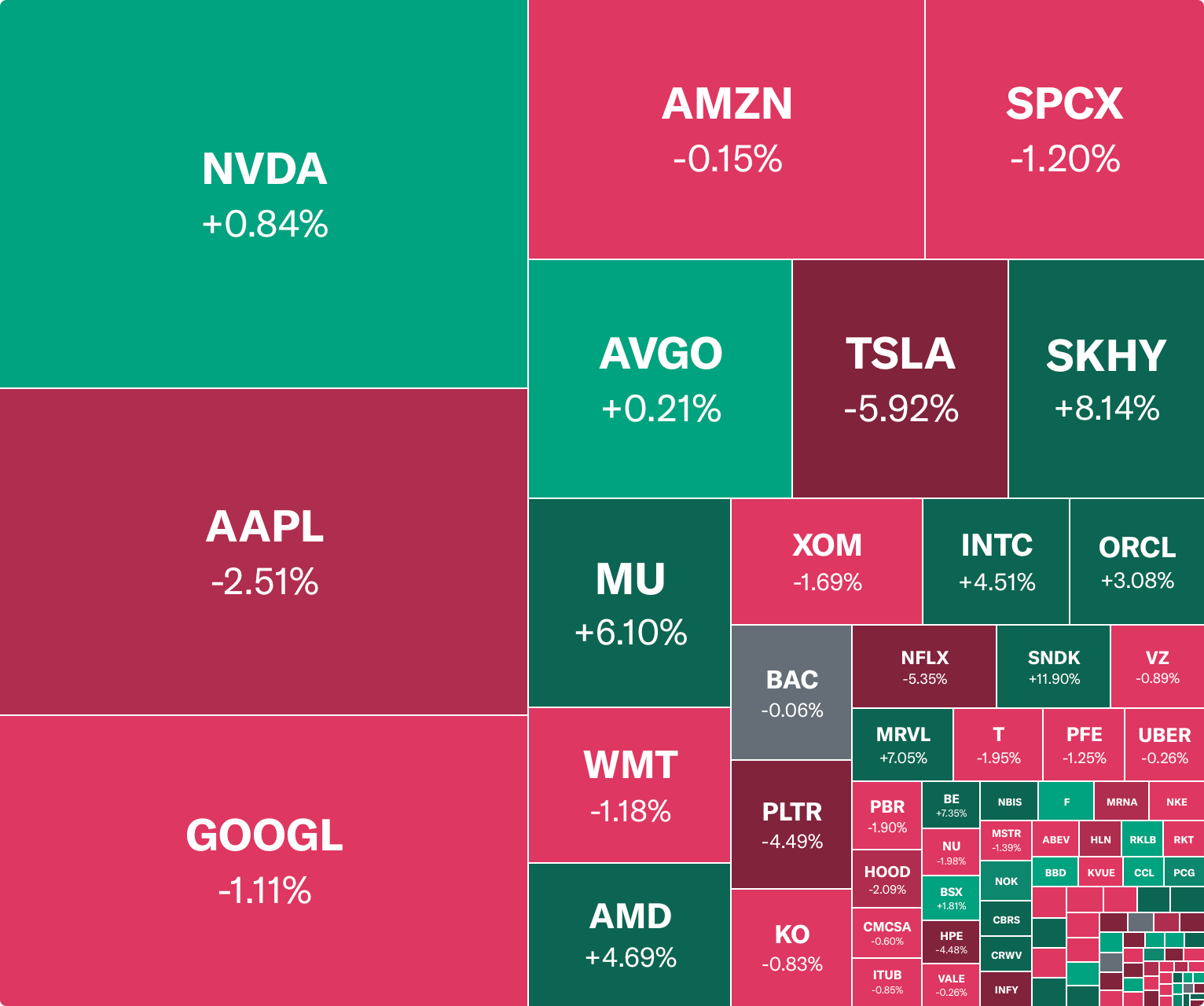
Good morning! It's a big day for Apple, with its much-anticipated presentation on a new (foldable?) iPhone coming at 1 p.m. ET. Be sure to follow along on our website. A day of concerning news sent stocks into the red on Tuesday as oil prices and bond yields surged — and Canada imposed its own retaliatory tariffs. The S&P 500 (^GSPC) fell 0.6%, the Nasdaq (^IXIC) 0.3%, and the Dow (^DJI) 1.2%. |
- The most-anticipated iPhone launch in Apple's recent history
- Goldman is worried about $120 oil
- Active fund managers love SpaceX and the passive ones will be forced to
- Robinhood is looking very dangerous — to banks
|
What we're watching Wednesday: Earnings might be ebbing, but Tuesday's crop of Chewy (CHWY), Navan (NAVN), and SailPoint (SAIL) may provide some interesting AI commentary from companies down the corporate food chain about adoption and efficiency. |
|
|
 | Headlines | |
|
|
 | Market snapshot Key market moves from last session | |
| Powered by  See the bigger picture. See the bigger picture. | |
|
|
The most-anticipated day in Apple's recent history |
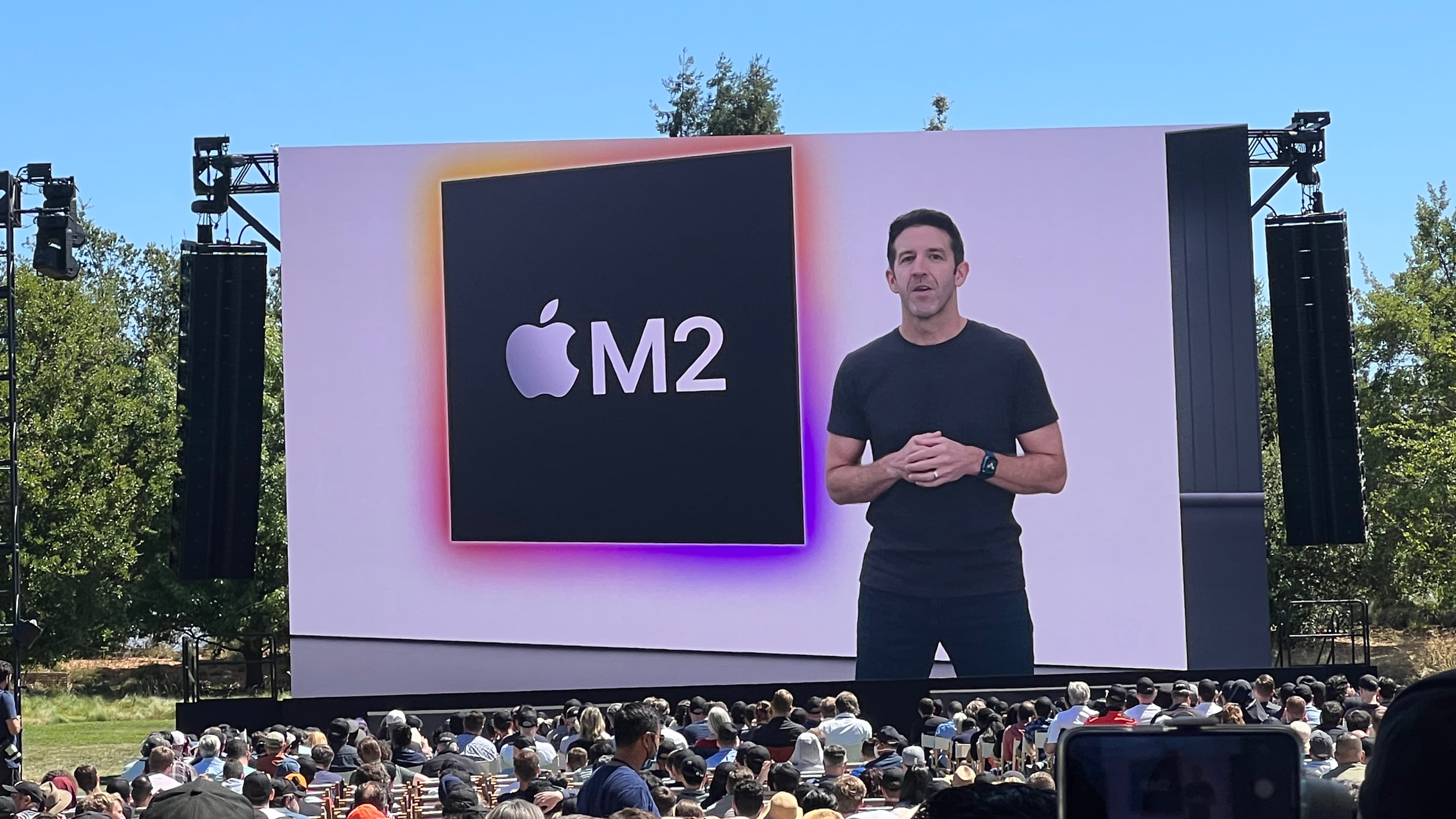
John Ternus is back on the Apple stage. But this time, he's the CEO. (Christoph Dernbach/picture alliance via Getty Images) | Apple’s annual iPhone launch event today will come with several firsts. Newly minted CEO John Ternus will take the keynote stage for the first time and is widely expected to oversee the debut of Apple's first foldable iPhone. The passport-style phone design may come with a $2,000 price tag, testing consumer demand and Apple’s ability to stretch a little out of its comfort zone. Other product upgrades, including the iPhone 18 Pro models and the Apple Watch Series 12, are expected to drop too. But the stakes are higher and more urgent than the anticipated hardware debuts. Wall Street and the public alike are still waiting for Apple to unveil more of its AI strategy and get a more concrete understanding of how an upgraded Siri will turbocharge the iPhone experience. And on the question of AI development, how will Ternus expand Apple’s famous “walled garden” to include AI agents and an ecosystem of AI tools that has largely grown outside of Cupertino’s purview? There are device unveilings, the AI and innovation questions, and then curiosity and anticipation around the man himself. If Tim Cook was a skilled diplomat and supply chain wizard, how might Ternus differentiate himself and answer the years-long criticism of a rudderless, aura-deficient Apple? The keynote won’t reveal everything. But first impressions, especially for a company so heavily reliant on its brand, will set the tone. Ternus can show off a nifty, foldable phone and a smarter Siri. But most of all, he’ll have to tell an eager audience what happens next. |
|
|
Goldman is worried about $120 oil |
A gull flies overhead as a boy stands with his bicycle on a beach overlooking commercial vessels anchored in the Strait of Hormuz off Bandar Abbas, Iran, Monday, Sept. 7, 2026. (AP Photo/Vahid Salemi) |
The $100 mark for oil is firmly in sight, with Brent (BZ=F) futures rising on Tuesday and the US benchmark WTI crude (CL=F) just behind, a hair under the $95 mark. If we crack $100 amid the recent escalation between the US and Iran, it'd be the first time in two months at this level. But Goldman Sachs is worried that's just the beginning — and $120 per barrel is on the table. Recent disruptions in the Persian Gulf and, critically, the Red Sea side have created even more pressure on the unresolved Strait of Hormuz front, which could keep prices rising to that level. Prices have been rising even amid the stalemate, indicating that no progress is actually actively a problem rather than a standstill. While high prices obviously cause economic damage, Goldman's energy analysts have also shifted their long-term outlook, raising their December price targets for oil by $5 to $80 per barrel for WTI and $85 per barrel for Brent. Tough news with the northern US's heating season in sight. But it's also adding fuel to the bond market's woes, as the 10-year yield hits 4.8%, and coloring the discussion about a Fed rate hike next week — even if the Fed futures show the chances of a hike have dropped to 60%. Another must-watch Fed day is on the horizon. |
|
|
Fund managers love SpaceX — and ones who don't will have to buy anyway |
(Joel Kowsky/NASA via Getty Images) |
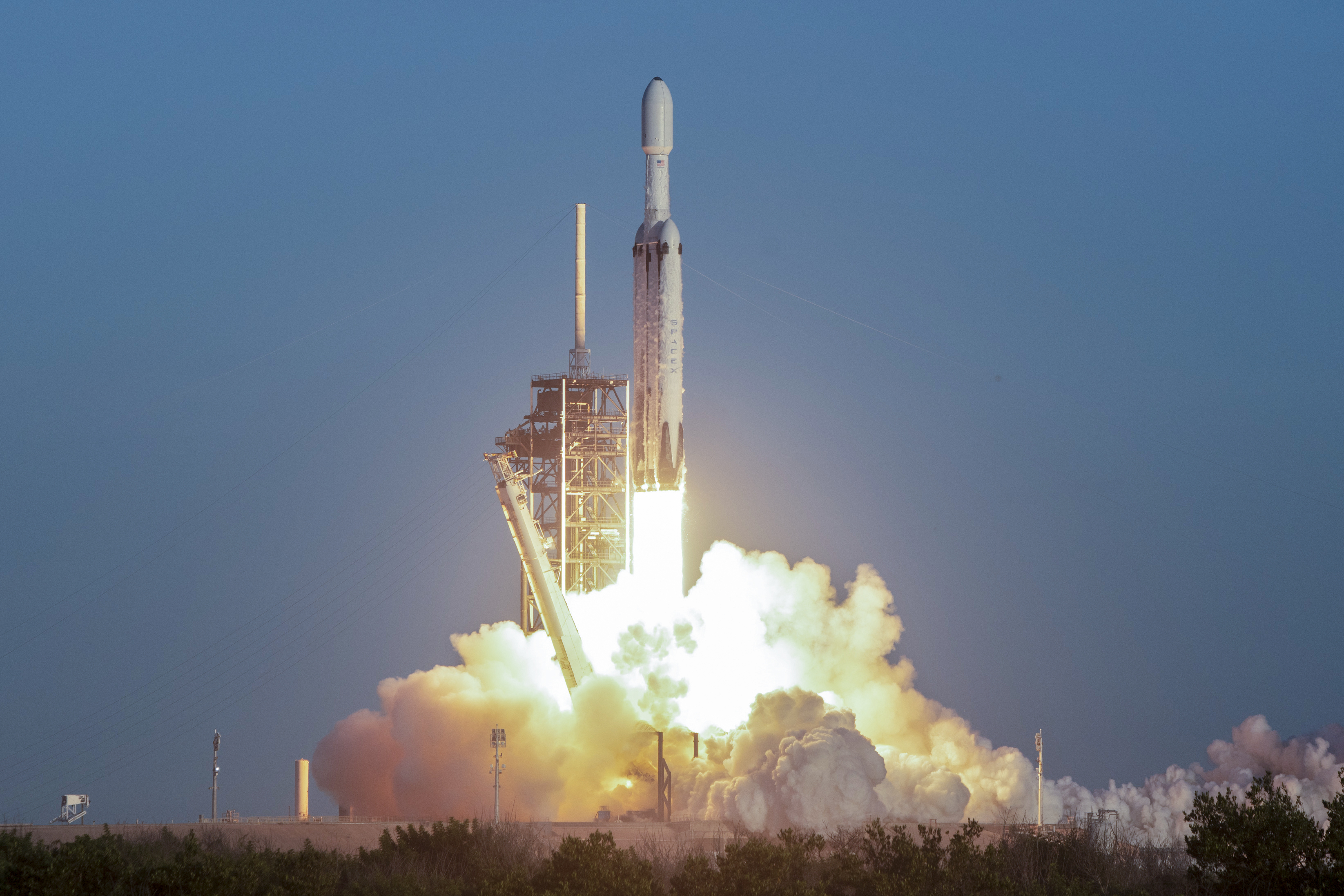
We've talked about how Wall Street loves SpaceX and sees big things despite the challenging debut on the public markets. And a recent analysis from Bank of America found that fund managers have had a very strong appetite for SpaceX stock, even going so far as to sell other splashy tech positions to fund the purchases. (Microsoft, Apple, and Amazon were the most commonly sold by funds that bought SpaceX post-IPO, BofA found.) But the active fund manager love that's helped give the stock a slightly more even keel is going to be joined by more passive counterparts in a few weeks as a little-known Nasdaq-100 rule may force a slew of passive funds to buy SpaceX after its weighting changes post-lockup. The index is rebalanced quarterly, and since SpaceX's inclusion in the Nasdaq-100, the company has seen a significant amount of shares exit a lockup period, changing the company's float — a key part of the weighting process for the index. That means $15.5 billion of net passive buying will have to happen, according to JPMorgan analysts. While that's good for SpaceX investors, one analyst mused to Bloomberg that this means it's going to be a while before the market gets a good read on the stock. Which, as our Brian Sozzi notes, needs to solve one huge issue to succeed. |
|
|
| | Popular on Yahoo Finance | |
|
|
Robinhood is looking very dangerous — to banks |
Robinhood is competing in more and more areas — including NASCAR, investment banking, prediction markets, and agentic investing. (Marc Sanchez/Sonoma Raceway/Icon Sportswire via Getty Images) | Robinhood just got its very first IPO underwriting job, with the consumer-focused brokerage jumping headfirst into perhaps the most big bank activity yet. Investment banking is obviously a very big business, and being one of smart-ring maker Oura's 18 financing partners is a new step that should be considered a shot across the industry's bow. Helping retail investors jump into IPOs would already be good business in a market that increasingly can't ignore everyday investors. But with big IPOs ahead in the burgeoning AI space, Robinhood smells opportunity. It's worth saying that Robinhood is pedal to the metal when it comes to new business. On Tuesday, the company announced an agreement for equity stakes in Crypto.com and prediction-market company OG.com, adding to its portfolio of offerings that seem to always stay on trend. On top of that, Bank of America analysts mused this week that agentic AI trading is aiding neobrokers like Robinhood in market share barnstorming and could add 9% to the company's 2027 earnings per share as clients early-adopt on its platform. Perhaps in a tacit recognition from one investment bank to another (we're kidding, of course), Goldman Sachs raised Robinhood's price target on Tuesday to $142 (Buy). |
|
|
 | Earnings and economic calendar | |
- Economic data: MBA mortgage applications, week ended Sept. 4 (+0.8% expected); ADP weekly employment change, week ended Aug. 22 (+11,750 previously)
- Earnings calendar: The Cooper Companies (COO), SailPoint (SAIL), Chewy (CHWY), AeroVironment (AVAV), Navan (NAVN), American Eagle Outfitters (AEO), Wealthfront (WLTH)
|
- Economic data: Initial jobless claims, week ended Sept. 5 (205,000 expected, 206,000 previously); Continuing claims, week ended Aug. 29 (1.78 million expected, 1.779 million previously); PPI final demand, month-on-month, August (+0.4% expected, +0% previously); PPI ex food and energy, month-on-month, August (+0.3% expected, +0.2% previously); PPI final demand, year-on-year, August (+5.2% expected, +4.7% previously); PPI ex food and energy, year-on-year, August (+4.6% expected, +4.2% previously); Existing home sales, month-on-month, August (-1.7% expected, -1.7% previously)
- Earnings calendar: Oracle (ORCL), Adobe (ADBE), Macy's (M)
|
- Economic data: CPI, month-on-month, August (+0.4% expected, +0.1% previously); Core CPI, month-on-month, August (+0.2% expected, +0.2% previously); CPI, year-on-year, August (+3.4% expected, +3.4% previously); Core CPI, year-on-year, August (+2.4% expected, +2.5% previously); Real average hourly earnings, year-on-year, August (-0.1% previously); Real average weekly earnings, year-on-year, August (+0.1% previously); U. Mich. sentiment, September preliminary reading (51 expected, 51.7 previously); U. Mich. current conditions, September preliminary reading (51.5 expected, 51.9 previously); U. Mich. expectations, September preliminary reading (51 expected, 51.5 previously); U. Mich. 1-year inflation, September preliminary reading (+4% previously); U. Mich. 5-10 year inflation, September preliminary reading (+3.3% expected, +3.3% previously)
- Earnings calendar: The Kroger Co. (KR), Rent the Runway (RENT)
|
|
| Yahoo Finance App: Portfolio performance, news and alerts, stock data and all you need in a finance app. Download now. |
|
|
If you like what we do, please forward us to a friend. If you're not already subscribed, sign up right here. |
|
|
|