͏ ͏ ͏ ͏ ͏ ͏ ͏ ͏ ͏ ͏ ͏ ͏ ͏ ͏ ͏ ͏ ͏ ͏ ͏ ͏ ͏ ͏ ͏ ͏ ͏ ͏ ͏ ͏ ͏ ͏ ͏ ͏ ͏ ͏ ͏ ͏ ͏ ͏ ͏ ͏ ͏ ͏ ͏ ͏ ͏ ͏ ͏ ͏ ͏ ͏ ͏ ͏ ͏ ͏ ͏ ͏ ͏ ͏ ͏ ͏ ͏ ͏ ͏ ͏ ͏ ͏ ͏ ͏ ͏ ͏ ͏ ͏ ͏ ͏ ͏ ͏ ͏ ͏ ͏ ͏ ͏ ͏ ͏ ͏ ͏ ͏ ͏ ͏ ͏ ͏ ͏ ͏ ͏ ͏ ͏ ͏ ͏ ͏ |
|
|
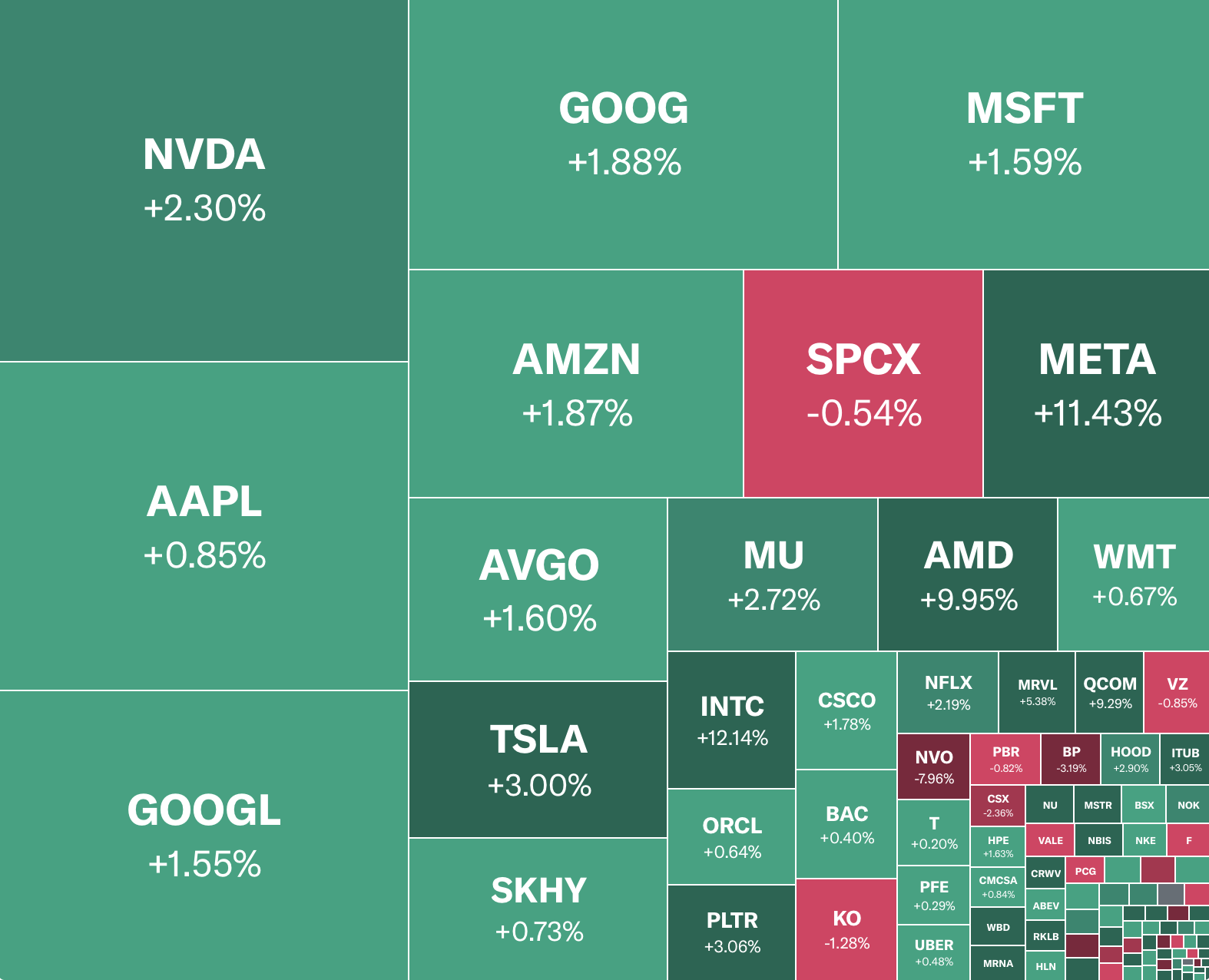
Good morning! What a Monday. Oil slid to an 11-day low amid a dose of optimism over the conflict with Iran. And a new wave of AI bullishness after a Meta upgrade helped propel stocks to a big day. The S&P 500 (^GSPC) jumped 1.5%, the Dow (^DJI) rose 0.7%, and the Nasdaq (^IXIC) surged 2.3%, marking a new all-time high. The risk-on sentiment also pushed bitcoin (BTC-USD) well over $86,000. |
- The post-phone hardware era is here as Oura goes public
- California is forcing Paramount to release 30 movies in theaters per year
- Strategy buys more bitcoin to get back in the green
- Tech stocks are the cheapest since ChatGPT shook everything up
|
What we're watching Tuesday: The risk-on mood will continue with some minor economic data and a check on homebuilding with KB Home (KBH) earnings. |
|
|
 | Headlines | |
|
|
 | Market snapshot Key market moves from last session | |
| Powered by  See the bigger picture. See the bigger picture. | |
|
|
The post-phone hardware era is here as Oura goes public |
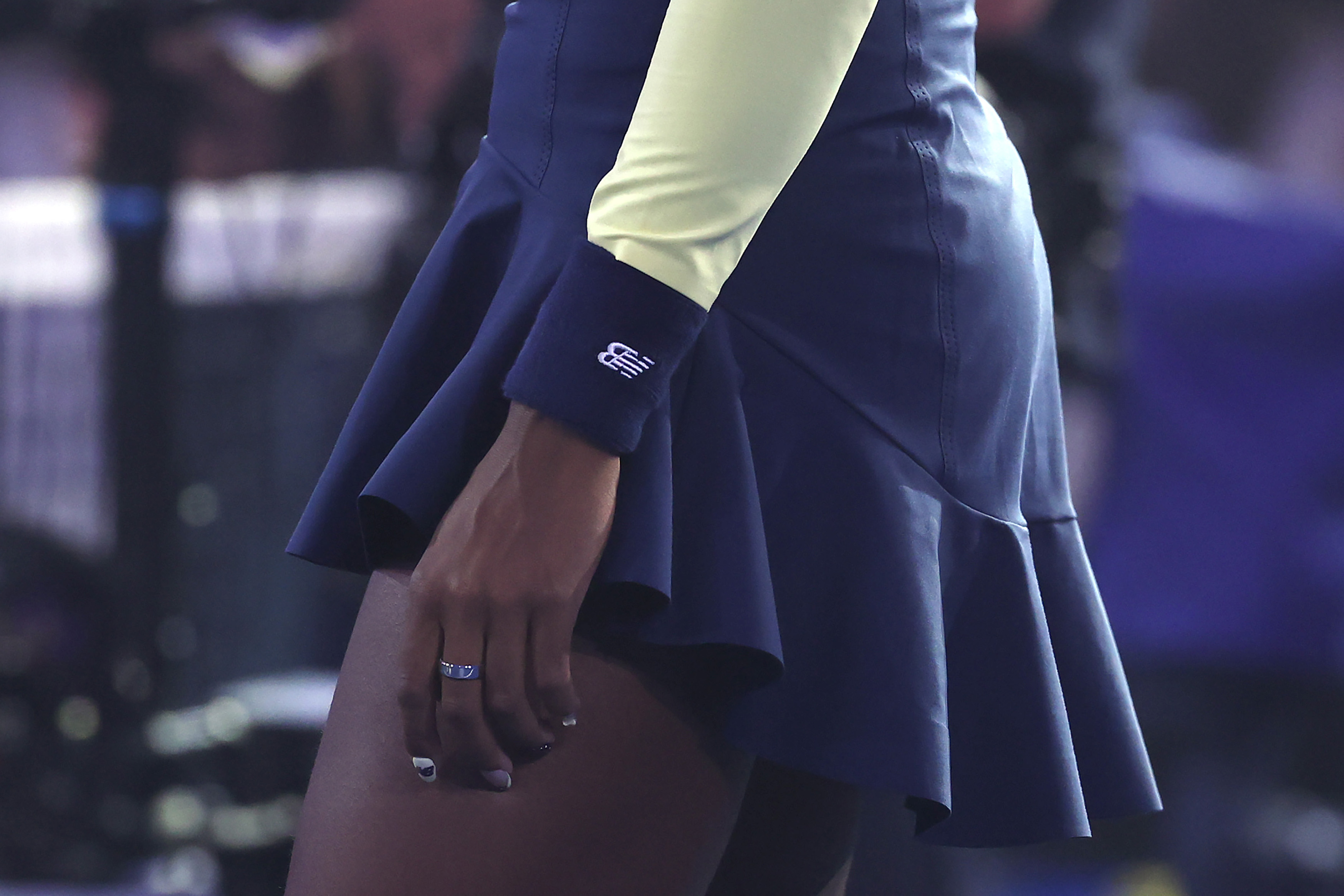
A detailed view of the Oura ring of Coco Gauff at the 2026 US Open on Sept. 1, 2026, in Queens, New York. (Patrick Smith/Getty Images) |
Monday morning brought us news that another popular consumer hardware device is looking to raise a few billion, trying its hand in the public markets as it starts its pre-IPO roadshow. Oura Health, which makes smart rings at $399 and up, will add regular people to its cadre of very famous investors that includes celebrities, Marc Benioff, Michael Dell, and many more. When it IPOs on the Nasdaq, you can probably guess its ticker symbol. I (Ethan) remember hearing about the Oura on Lance Armstrong's podcast, which I had to stop listening to because it was 25% ads — an unsaleable fat ratio if it were ground meat. But Armstrong (an early investor) talking his VC book at great lengths seemed to either work or forerun a trend: Smart, screenless jewelry has become both lucrative and ubiquitous. After years of phone stagnation, the key to hardware sales — as the Apple Watch correctly guessed — has been health. Not just sports. Not just sleep. A product that was once "gadget/jewelry" has transformed into something essential. And in a way that wasn't forced on consumers, like wireless headphones with the elimination of the headphone jack. Though this isn't yet the AI "phone killer" device, but rather a peripheral, we have to think Oura, Whoop, and smart glasses from Meta and Snap are priming the consumer for new devices, even if, as Apple hopes, the phone remains the control center of the AI future. Oura is hoping to see a $15.6 billion valuation. The company saw annual revenue of $1.2 billion in the 12 months that ended June 30, up from just over half that the year before. It is, of course, not yet profitable, losing over $900 million. While its product has passed testing on the consumer market with flying colors, the stock debut will be a major test of investor appetite for consumer-focused hardware. And, perhaps, the market writ large as it faces painfully high rates. |
|
|
California is forcing Paramount to release 30 movies in theaters per year |
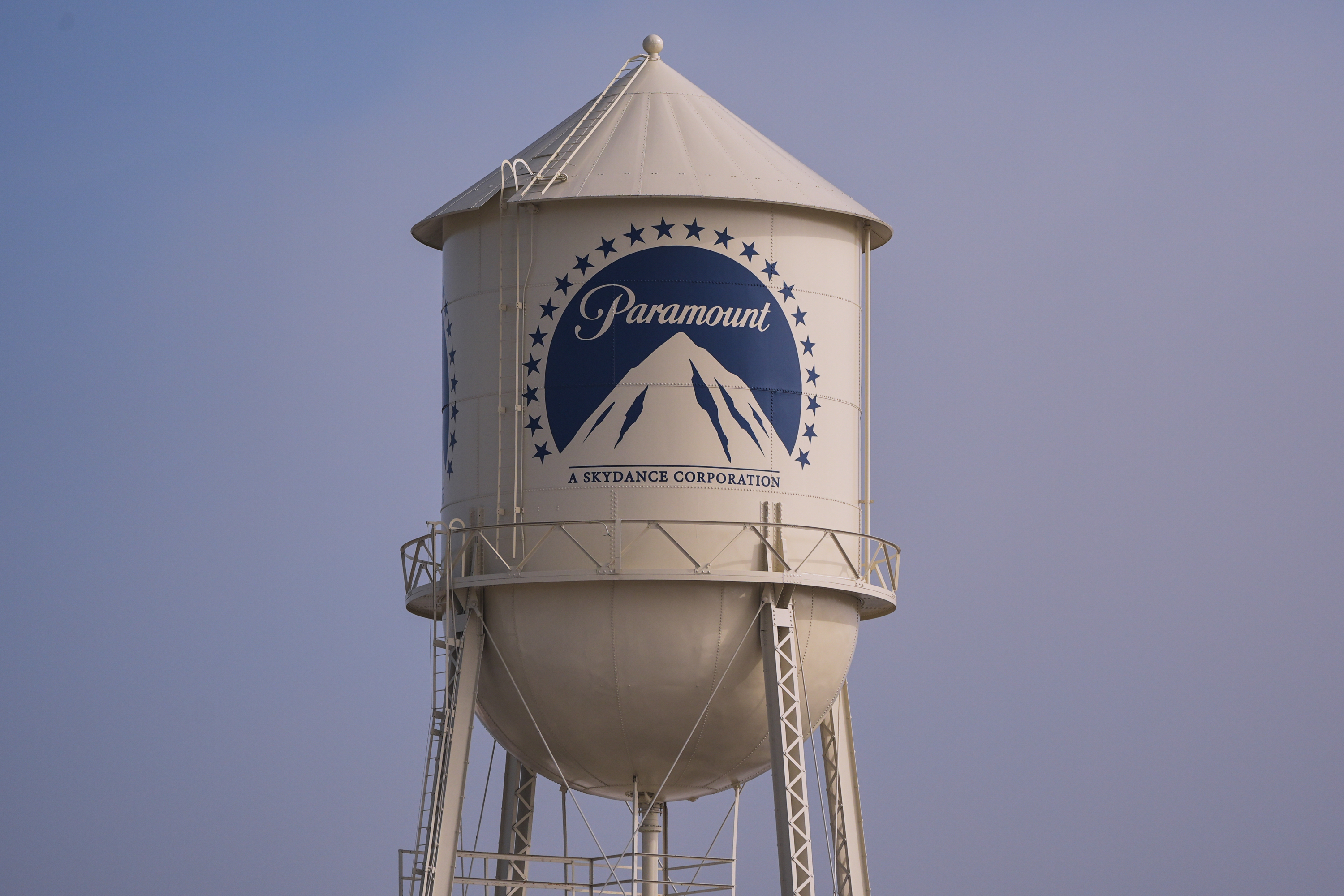
The Paramount Pictures water tower is seen in Los Angeles on Dec. 17, 2025. (AP Photo/Jae C. Hong) |
Paramount finally reached a settlement with California officials, clearing the way for the entertainment company to complete its mega deal to acquire Warner Bros., which would combine two of Hollywood's largest players and reshape the film and TV world. Stock of both companies jumped on Monday in response. The end of the antitrust lawsuit removes the last serious hurdle to Paramount bringing brands such as HBO and CNN under its umbrella. Up until the settlement, the legal drama had captivated Hollywood and sparked intense debate in Washington and across the country over media and entertainment consolidation. Paramount beat out Netflix in a bidding war earlier this year, but questions loomed over whether a deal between Paramount and Warner Bros. would actually close. Creative professionals as well as state regulators have vocally opposed the deal, arguing that the tie-up would harm competition and put too much power and influence under one media conglomerate's roof. According to reports, one key concession is that Paramount will have to release 30 films in theaters per year, or pay $30 million for each movie that doesn't hit the silver screen — and possibly lose its stake in Miramax — if it doesn't. |
|
|
Strategy buys more bitcoin to get back in the green
|
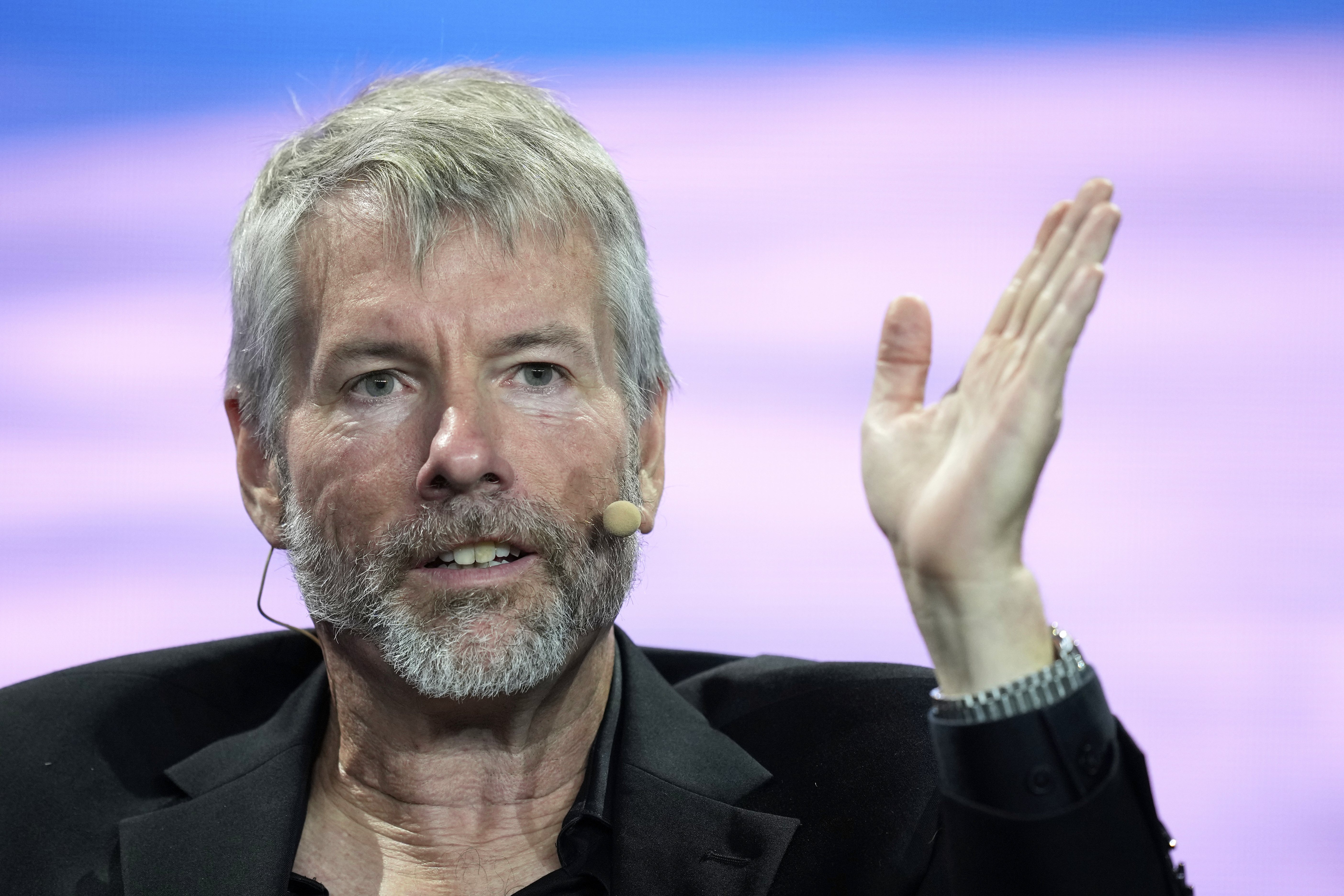
Michael Saylor, chairman and CEO of MicroStrategy(AP Photo/Rebecca Blackwell, File) |
Strategy (MSTR) did what it does best, and investors poured in. The stock of the bitcoin holding company rose more than 8% on Monday after it disclosed that it bought more bitcoin and repurchased preferred stock last week. The move pushed Strategy stock back into positive territory for the year — up about 1% since January — marking a comeback after several tough months of crypto winter. The disclosure came as other crypto stocks rallied and bitcoin's price jumped more than 6% to trade above $85,000, its highest level since January. It also followed a cryptic yet suggestive Sunday post on X from founder Michael Saylor, which read "a little more orange," over a chart that tracked the company's bitcoin purchases with big orange circles. Investors now are seeing a little more green too. Strategy’s recent woes began mounting earlier this year as bitcoin and the broader crypto market lost ground, putting Strategy in a bind. The company was forced to sell bitcoin and stock to raise funds to meet debt and preferred stock dividend payments. After an initial tumble following the failure of the crypto industry's big bill to advance in the Senate, Saylor, along with Coinbase CEO Brian Armstrong, called for the industry to quickly look past the black eye, arguing the crypto world might be better off without the legislation. And by buying back what it sold, it's putting its money where its mouth is. |
|
|
| | Popular on Yahoo Finance | |
|
|
Tech stocks are the cheapest since ChatGPT shook everything up |
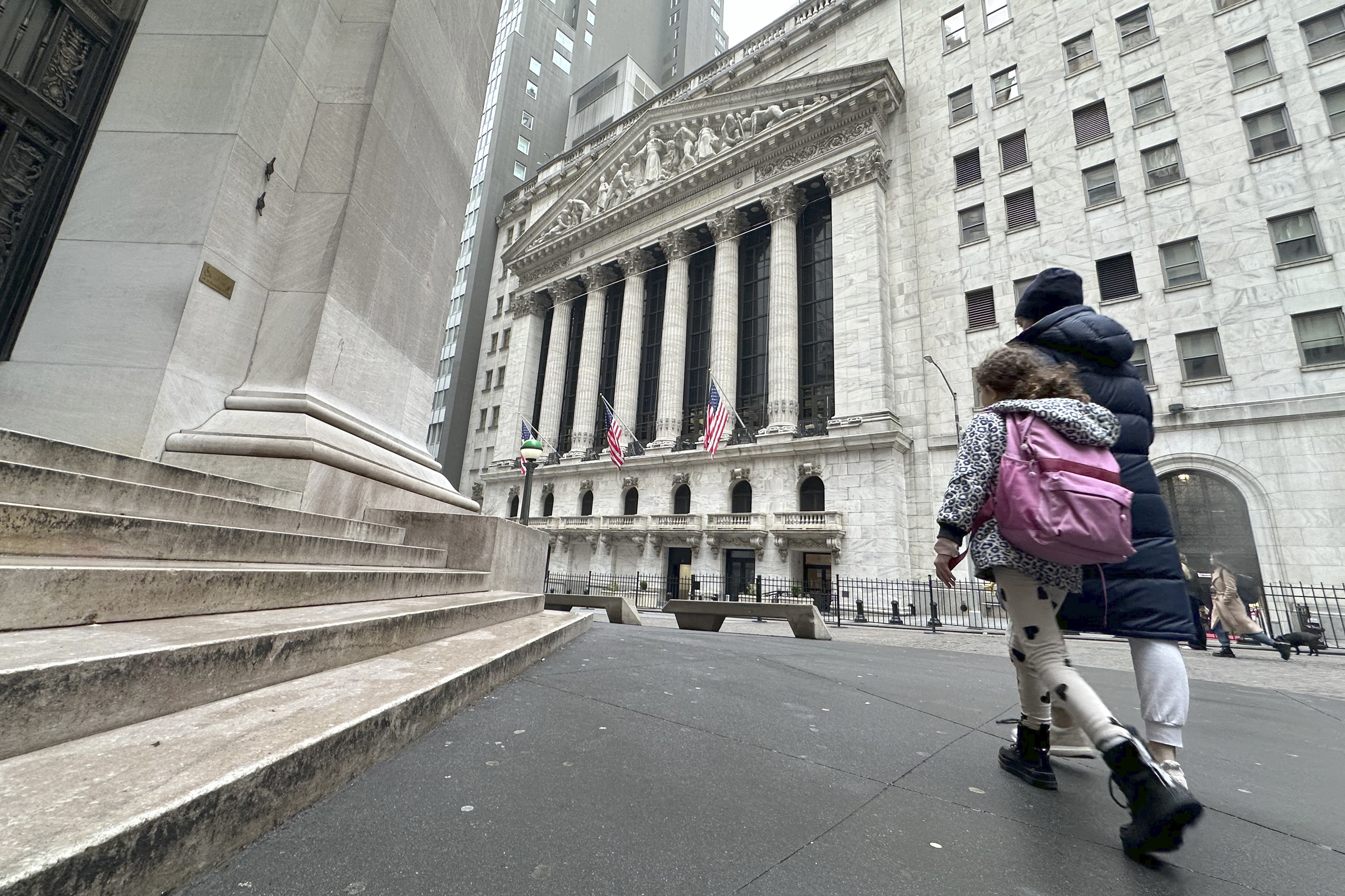
Wall Street (AP Photo/Peter Morgan) | The stock market is supposed to be a price discovery machine. Everything is worth what its number on our website's quote page says, because with assets changing hands all the time, the price is tested all the time. But something interesting has been happening lately. While earnings growth remains strong, valuations — price-to-earnings ratios — have been on the weaker side as risks (and/or anxiety about possible risks) have weighed on stocks. For the tech sector specifically, Truist's Keith Lerner pointed out this week that valuations have fallen from 32x (price-to-earnings) to just 21x. The level is notable, as that's where things were in November 2022 when OpenAI's ChatGPT forever changed people's perception of AI. This is the price now. And whether this represents a "deal" or not depends on whether you agree with the market that the AI risks merit the discount. We're thinking about circular financing, regulation risk, or the fact that the path toward profitability may meander for years. |
|
|
 | Earnings and economic calendar | |
- Economic data: ADP weekly employment change, week ended Sept. 5 (+16,250 previously); Philadelphia Fed non-manufacturing index, September (-10.6 previously); Richmond Fed manufacturing index, September (4 previously); Richmond Fed business conditions, September (-12 previously)
- Earnings calendar: THOR Industries (THO), KB Home (KBH)
|
- Economic data: MBA mortgage applications, week ended Sept. 18 (-4.1% previously); S&P Global US manufacturing PMI, September preliminary reading (53.6 expected, 53.9 previously); S&P Global US services PMI, September preliminary reading (56 expected, 56.5 previously); S&P Global US composite PMI, September preliminary reading (56 previously)
- Earnings calendar: Cintas Corporation (CTAS), Paychex (PAYX), General Mills (GIS), H.B. Fuller Company (FUL), Cracker Barrel Old Country Store (CBRL)
|
- Economic data: Current account balance, second quarter (-$226.8 billion previously); Initial jobless claims, week ended Sept. 19 (196,000 previously); Continuing claims, week ended Sept. 12 (1.73 million previously); New home sales, month-on-month, August (+1.3% expected, -10.5% previously); Building permits, month-on-month, August final reading (-2.7% previously); Kansas City Fed manufacturing activity, September (10 previously)
- Earnings calendar: Costco Wholesale Corporation (COST), Darden Restaurants (DRI), Uranium Energy Corp. (UEC), BlackBerry (BB), Scholastic Corporation (SCHL)
|
- Economic data: Durable goods orders, August preliminary reading (-0.3% expected, +1.1% previously); Kansas City Fed services activity, September (-3 previously); U. Mich. sentiment, September final reading (47.8 expected, 47.8 previously); U. Mich. current conditions, September final reading (50.9 previously); U. Mich. expectations, September final reading (45.8 previously); U. Mich. 1-year inflation, September final reading (+4.6% previously); U. Mich. 5-10 year inflation, September final reading (+3.4% previously)
- Earnings calendar: Tamboran Resources Corporation (TBN)
|
|
|
Yahoo Finance App: Portfolio performance, news and alerts, stock data and all you need in a finance app. Download now. |
|
|
If you like what we do, please forward us to a friend. If you're not already subscribed, sign up right here. |
|
|
|