͏ ͏ ͏ ͏ ͏ ͏ ͏ ͏ ͏ ͏ ͏ ͏ ͏ ͏ ͏ ͏ ͏ ͏ ͏ ͏ ͏ ͏ ͏ ͏ ͏ ͏ ͏ ͏ ͏ ͏ ͏ ͏ ͏ ͏ ͏ ͏ ͏ ͏ ͏ ͏ ͏ ͏ ͏ ͏ ͏ ͏ ͏ ͏ ͏ ͏ ͏ ͏ ͏ ͏ ͏ ͏ ͏ ͏ ͏ ͏ ͏ ͏ ͏ ͏ ͏ ͏ ͏ ͏ ͏ ͏ ͏ ͏ ͏ ͏ ͏ ͏ ͏ ͏ ͏ ͏ ͏ ͏ ͏ ͏ ͏ ͏ ͏ ͏ ͏ ͏ ͏ ͏ ͏ ͏ ͏ ͏ ͏ ͏ |
|
|
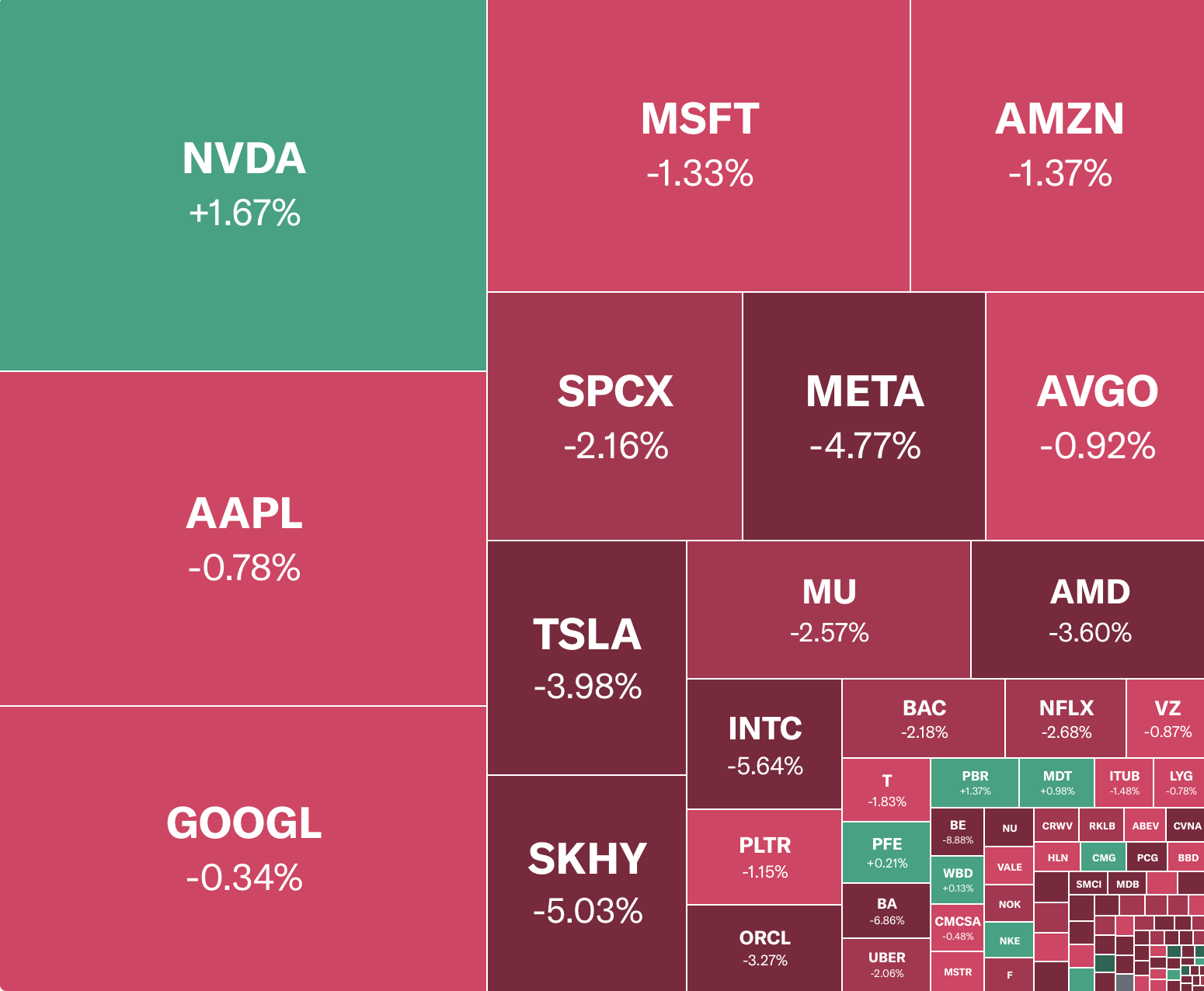
Good morning! The new normal of what a 10-year Treasury yield (^TNX) looks like shifted again, as it jumped to 5.25% on rising tensions with Iran — and oil prices. Wild to think that we were concerned when it was at 4.5%. The S&P 500 (^GSPC) fell 0.8%, the Dow (^DJI) 0.7%, and the Nasdaq (^IXIC) 0.9%. Imagine if the stock market didn't have oil and bond yield problems? |
- Nvidia is trading like an oil stock — and taking advantage of the moment
- A successful orbit is just the beginning of a huge week for the Muskverse
- Muse is a nightmare for friction as a business model
- A prominent economist issues a major warning to the Fed
|
What we're watching Tuesday: It's a big day for macro data with a few economic checks to monitor. The Job Openings and Labor Turnover survey will give us an update on employer/employee sentiment for August, and the Conference Board's consumer confidence numbers will show if last week's tanking sentiment has legs. |
|
|
 | Headlines | |
|
|
 | Market snapshot Key market moves from last session | |
| Powered by  See the bigger picture. See the bigger picture. | |
|
| Nvidia is trading like an oil stock — and taking advantage of the moment |
Jensen Huang looks on as President Trump hosts a state dinner in the East Room of the White House on Sept. 24, 2026, in Washington, D.C. (Kevin Dietsch/Getty Images) |
The AI chip king is closing in on a record high, riding high even as its peers struggle. But of all the tech darlings, Nvidia (NVDA) has the most modest multiple. Despite being the heart of the AI trade and a shining example of post-COVID growth in America, every other member of the "Magnificent Seven" has been trading at a higher premium. Per FactSet, Nvidia's forward price-to-earnings multiple is even lower than that of the S&P 500. It's almost a certainty that CEO Jensen Huang, clad in his leather jacket of bullish optimism, is not thrilled with his company's valuation ratio, with way more work and profit required to reach that record high. But Huang and Nvidia's board wasted no time and took advantage of the low valuation to execute the largest buyback ever in the US, a $150 billion increase to its stock buyback program. Yet another instance of Nvidia flexing its cash. Nvidia's relative cheapness brings an unexpected comparison to mind: ExxonMobil (XOM). That's the thrust of a new and surprising analysis by DataTrek co-founder Nicholas Colas, who frames the two firms as underrated tickers at the center of scarcity investment stories — data and oil — both with forward multiples under the S&P 500. As Colas notes, you might expect a legacy energy company to trade at a discount. But if data is the new oil, why is the linchpin of the AI trade so cheap? For Nvidia bears who believe the hype is overblown, the company's growth trajectory offers a startling rebuttal. As Colas observes, Wall Street analysts' revenue estimates pin the company's fiscal year 2028 sales numbers at close to $700 billion. That brings us back to the Exxon comparison. While the two companies in 2026 are roughly equivalent in revenue, Nvidia's growth curve is on a different level, making the P/E comparison almost droll. |
|
|
A successful orbit is just the beginning of a huge week for the Muskverse |
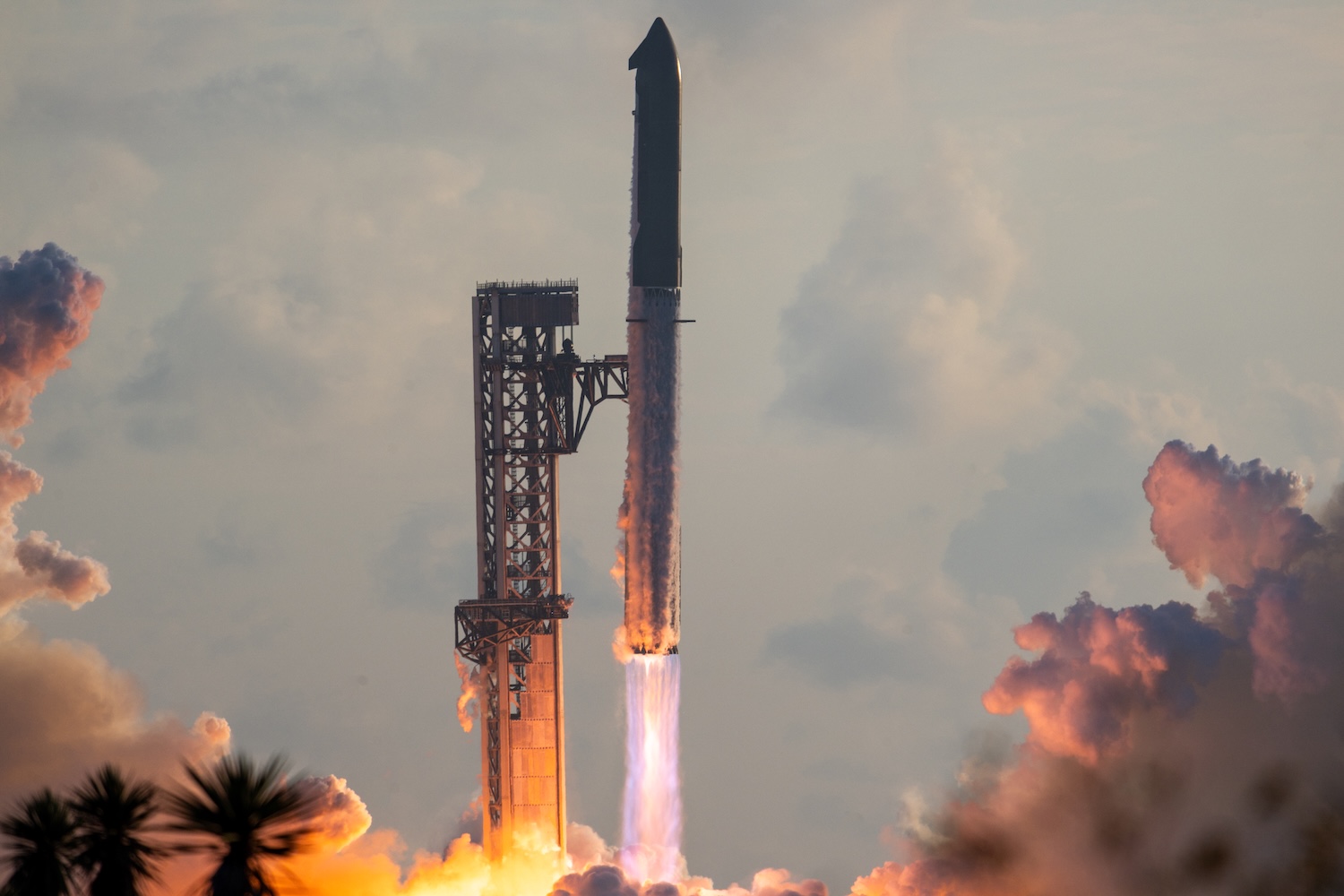
SpaceX Starship Flight 14 launches from its launch pad at Boca Chica Beach on Sept. 28, 2026, in Boca Chica Beach, Texas. (Brandon Bell/Getty Images) |
We aren't above admitting it: This is an overwhelming week for the Muskverse, and we're thankful that a former Tesla employee made a handy graphic outlining some of the big events this week. First off, SpaceX's Starship successfully reached Earth orbit for the first time, deploying 26 Starlink satellites. On top of that, it did so with an engine going out, an impressive problem-solving feat that shows some "Right Stuff" in play. The market seemed to have sold the news, but Deepwater analyst Gene Munster posted — on a Musk-owned vehicle, of course — that the market was "underappreciating the significance." In his view, the company has shown it can get payload into orbit more cheaply, and the satellites will turbocharge download speeds. No matter, there's plenty more to come. Thursday will feature two SpaceX Falcon launches (one to the ISS and one heavy). The week will conclude with the Tesla Q3 delivery numbers, which analysts are holding their breath for. We'll close this table-setting with one thing that our Executive Editor Brian Sozzi noticed in his inbox from Evercore ISI's Kutgun Maral. Maral posited that GPU demand could be the next big catalyst for SpaceX's reputation as a powerful data center company with commensurate valuation. A catalyst that investors are overlooking, perhaps understandably, with all the variables in play that come with fiery rockets. But with every successful launch, we might add, that uncertainty burns up into the atmosphere. |
|
|
Muse is a nightmare for friction as a business model |
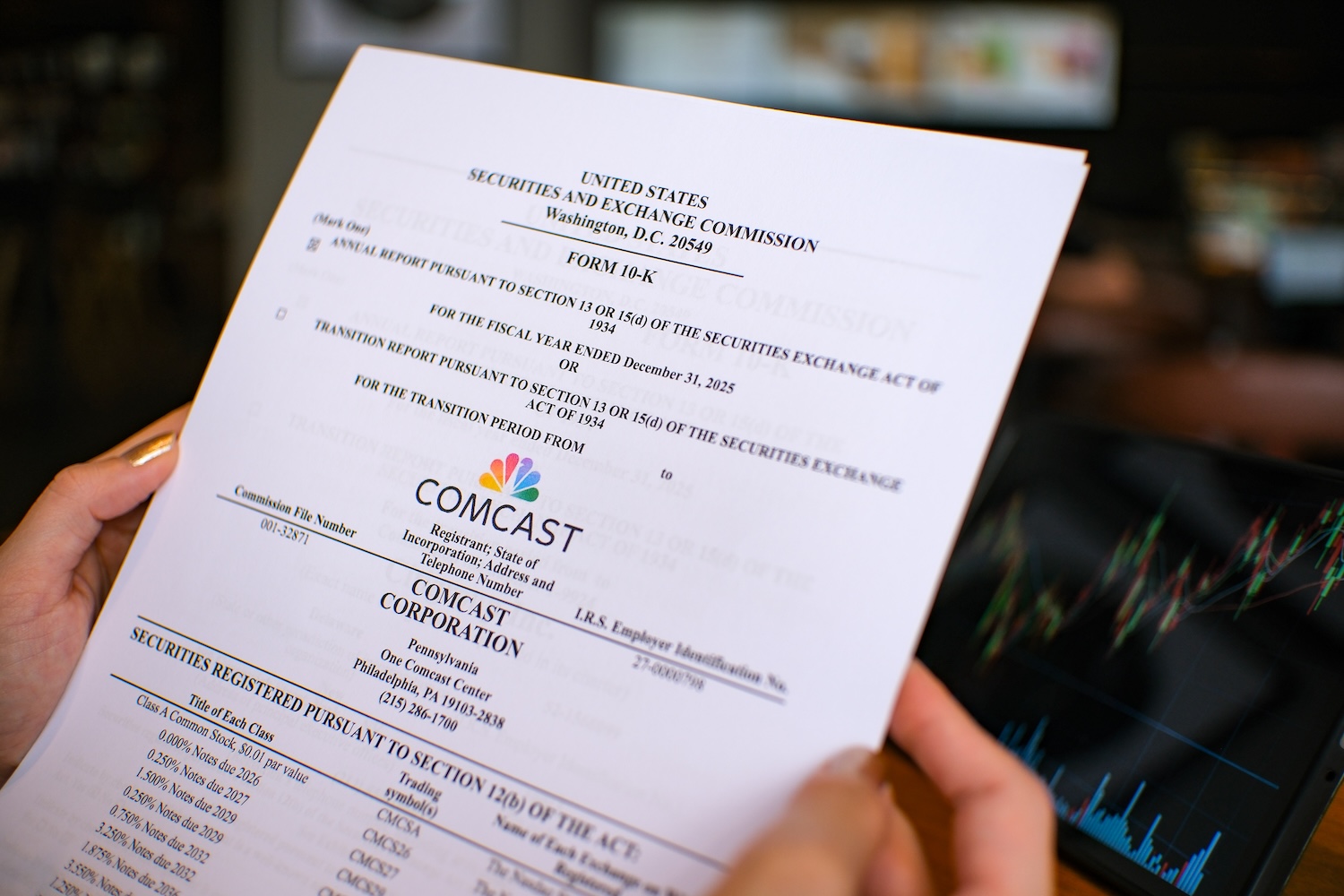
In this photo illustration, a woman is reviewing a Form 10-K annual report. (Sheldon Cooper/SOPA Images/LightRocket via Getty Images) |
The most striking analysis to come from the debut of new consumer-focused AI agents isn't about what they can accomplish right now, which is impressive enough. Rather, it’s all the different ways they might profoundly alter consumer behavior. Take banking. As Apollo chief economist Torsten Sløk wrote in a blog post on Sunday, AI agents such as Meta's Muse (META) could redirect household cash, which is typically stored in tepid checking accounts, into other accounts that pay upward of 5%. (Disclosure: Yahoo is a portfolio company of funds managed by affiliates of Apollo Global Management.) "If every household used AI agents to optimize the return on their cash balances, banks could lose a large share of the cheap deposits they rely on to make loans, which would be a problem for the entire financial system," he wrote. The stark example of potential disruption, with the arresting headline "Is an Agentic Bank Run Coming?" encapsulates just how much other companies, industries, and ways of doing business stand to lose once certain tasks become not just automated but intellectually outsourced to an LLM hitched to your computer. Nearly every single administrative or customer service-based behavior or activity is performed through an interface or series of logins. What people perceive as hard or tedious corporate hassles means customer inertia that translates into very real profits. That worked for decades. But the death of friction could mean curtains for all companies that depend on psychological barriers to keep customers locked in. | |
|
| | Popular on Yahoo Finance | |
|
|
A prominent economist issues a major warning to the Fed |
(Brendan SMIALOWSKI / AFP via Getty Images) |
We're being flooded with a lot of Fedspeak about how more hikes may be needed as AI and oil prices keep inflation high. Barring something shocking this week as more economic data gets released, markets are leaning toward another hike in 28 days. But Moody's chief economist Mark Zandi, who has a well-earned reputation as someone worth listening to, says this would be a "serious policy mistake," telling Yahoo Finance that the economy will "start to sag as a result of the rate increases." The question that economists like Zandi and others are worried about isn't just how high the rate line is on the chart, but rather the area under it. In other words, how long the elevated rates will last. A quick jaunt up and down is one thing, but if we're talking about an extended period of higher for longer, Zandi thinks this would do some serious damage. The economist's thoughts get at the question of what the Fed's rates actually do — and, more pointedly, what they can't. As many quipped post-September hike, the Fed can't open Hormuz, and it can't dissuade the AI hypebeast from making it rain. But it can hurt households, businesses that rely on reasonably priced money, and other parts of the economy. Critically, parts that are not particularly contributing to the inflation crisis. |
|
|
 | Earnings and economic calendar | |
- Economic data: FHFA house price index, month-on-month, July (+0% previously); Conference Board consumer confidence, September (90 expected, 89.4 previously); Conference Board present situation, September (121.2 previously), JOLTS job openings, August (7.225 million expected, 7.271 million previously); JOLTS quits rate, August (1.9% previously); JOLTS layoffs rate, August (1% previously); Dallas Fed services activity, September (4.2 previously)
- Earnings calendar: Carnival Corporation (CCL), CarMax (KMX), AAR (AIR), Uranium Energy Corp. (UEC), Concentrix Corporation (CNXC)
|
- Economic data: MBA mortgage applications, week ended Sept. 25 (-1.5% previously); ADP employment change, September (+70,000 expected, +38,000 previously); Retail inventories, month-on-month, August (+0.8% previously); Personal income, August (+0.5% expected, +0.4% previously); Personal spending, August (+0.9% expected, +0.2% previously); PCE price index, month-on-month, August (+0.4% expected, +0.2% previously); PCE price index, year-on-year, August (+3.7% expected, +3.7% previously); Core PCE price index, month-on-month, August (+0.3% expected, +0.2% previously); Core PCE price index, year-on-year, August (+3.3% expected, +3.3% previously); GDP annualized, quarter-on-quarter, second quarter (+1.5% expected, +1.5% previously); Personal consumption, second quarter (+3.4% expected, +3.4% previously); MNI Chicago PMI, September (51.2 expected, 47.1 previously)
- Earnings calendar: Micron Technology (MU), Jabil (JBL), FactSet Research Systems (FDS), Conagra Brands (CAG)
|
- Economic data: Challenger job cuts, year-on-year, September (-38.5% previously); Initial jobless claims, week ended Sept. 26 (197,000 previously); Continuing claims, week ended Sept. 19 (1.719 million previously); S&P Global US manufacturing PMI, September final reading (57 previously); ISM manufacturing, September (55 expected, 54.6 previously); ISM prices paid, September (72 expected, 71.1 previously); ISM new orders, September (53.7 previously); ISM employment, September (51.2 previously); Construction spending, month-on-month, August (+0.1% expected, -0.5% previously); Omdia total vehicle sales, September (16.59 million expected, 16.76 million previously)
- Earnings calendar: Accenture (ACN), Nike (NKE), McCormick & Company (MKC), Acuity (AYI)
|
- Economic data: Change in nonfarm payrolls, September (+100,000 expected, +162,000 previously); Change in private payrolls, September (+90,000 expected, +127,000 previously); Change in manufacturing payrolls, September (+10,000 expected, +16,000 previously); Average hourly earnings, month-on-month, September (+0.3% expected, +0.3% previously); Average hourly earnings, year-on-year, September (+3.2% expected, +3.1% previously); Unemployment rate, September (4.1% expected, 4.1% previously); Labor force participation rate, September (61.6% previously); Factory orders, August (-0.1% expected, +0.9% previously)
- Earnings calendar: Trilogy Metals (TMQ)
|
|
|
Yahoo Finance App: Portfolio performance, news and alerts, stock data and all you need in a finance app. Download now. |
|
| If you like what we do, please forward us to a friend. If you're not already subscribed, sign up right here. |
|
|
|