͏ ͏ ͏ ͏ ͏ ͏ ͏ ͏ ͏ ͏ ͏ ͏ ͏ ͏ ͏ ͏ ͏ ͏ ͏ ͏ ͏ ͏ ͏ ͏ ͏ ͏ ͏ ͏ ͏ ͏ ͏ ͏ ͏ ͏ ͏ ͏ ͏ ͏ ͏ ͏ ͏ ͏ ͏ ͏ ͏ ͏ ͏ ͏ ͏ ͏ ͏ ͏ ͏ ͏ ͏ ͏ ͏ ͏ ͏ ͏ ͏ ͏ ͏ ͏ ͏ ͏ ͏ ͏ ͏ ͏ ͏ ͏ ͏ ͏ ͏ ͏ ͏ ͏ ͏ ͏ ͏ ͏ ͏ ͏ ͏ ͏ ͏ ͏ ͏ ͏ ͏ ͏ ͏ ͏ ͏ ͏ ͏ ͏ |
|
|
- The simple reason JPM thinks SpaceX is going to triple
- Meta and Tesla add to a potential theme this quarter: Capex discipline
- Nvidia's new container-sized data center shows a product-first strategy to keeping demand strong
- Netflix is losing viewers — but they're still subscribed
|
What we're watching Thursday: Economic data: Initial jobless claims, week ended Oct. 17 (199,000 prior); Continuing claims, week ended Oct. 10 (1.71 million prior); Kansas City Fed manufacturing activity, October (14 prior) Earnings calendar: Procter & Gamble (PG), Union Pacific (UNP), Southern Copper Corporation (SCCO), Western Digital (WDC), Valero Energy (VLO), Lockheed Martin (LMT), Newmont Corporation (NEM), Spotify (SPOT), Blackstone (BX), Comcast (CMCSA), Barclays (BCS), Norfolk Southern (NSC), Bloom Energy (BE), Honeywell International (HON), Comfort Systems USA (FIX), PG&E (PCG), CBRE Group (CBRE), Roper Technologies (ROP), Deckers Outdoor Corporation (DECK) Yahoo Finance Morning Brief is written by Ethan Wolff-Mann and Hamza Shaban. |
|
|
 | Headlines | |
|
|
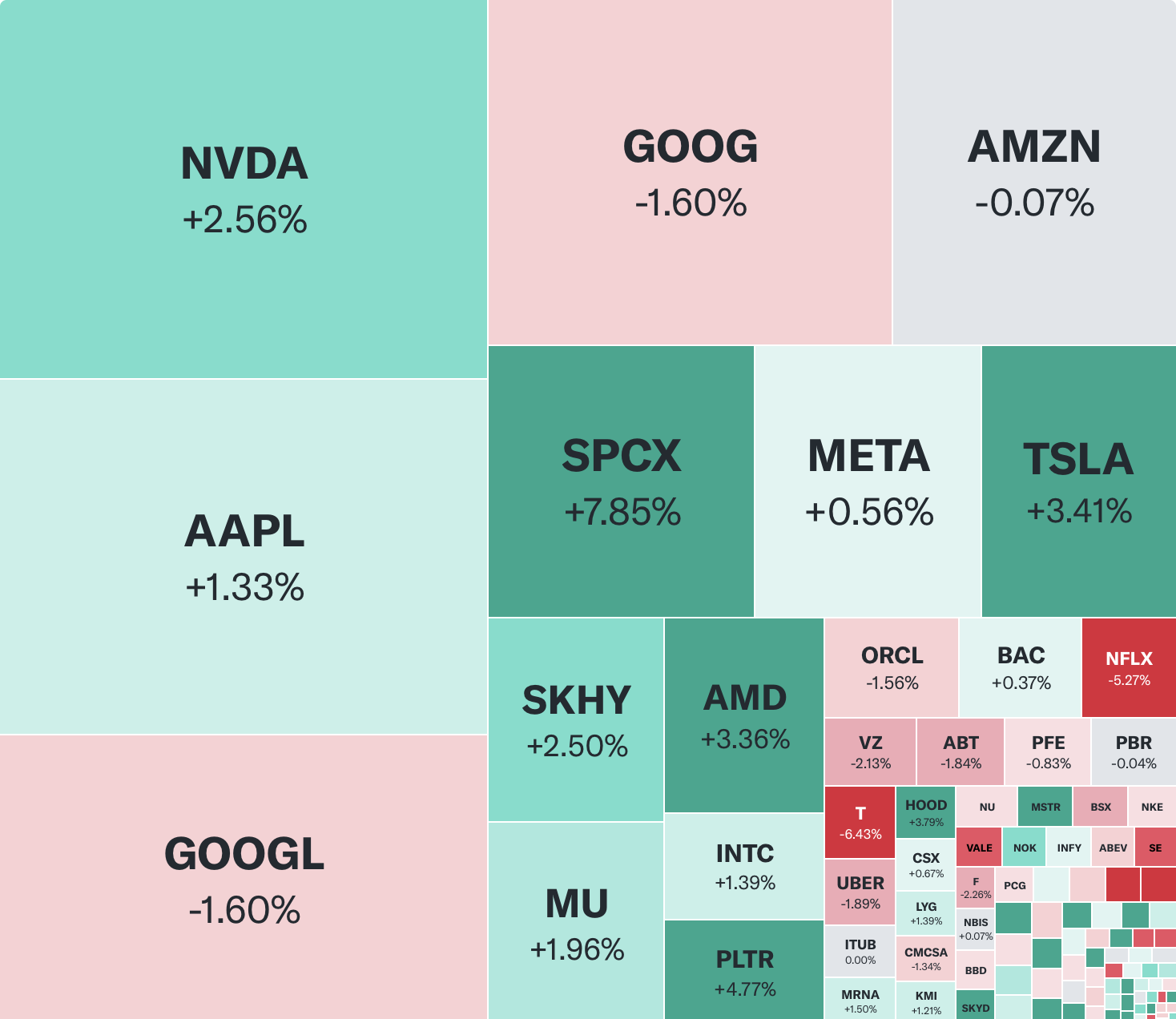
 | Market snapshot Key market moves from last session | |
| Powered by  See the bigger picture. | |
|
|
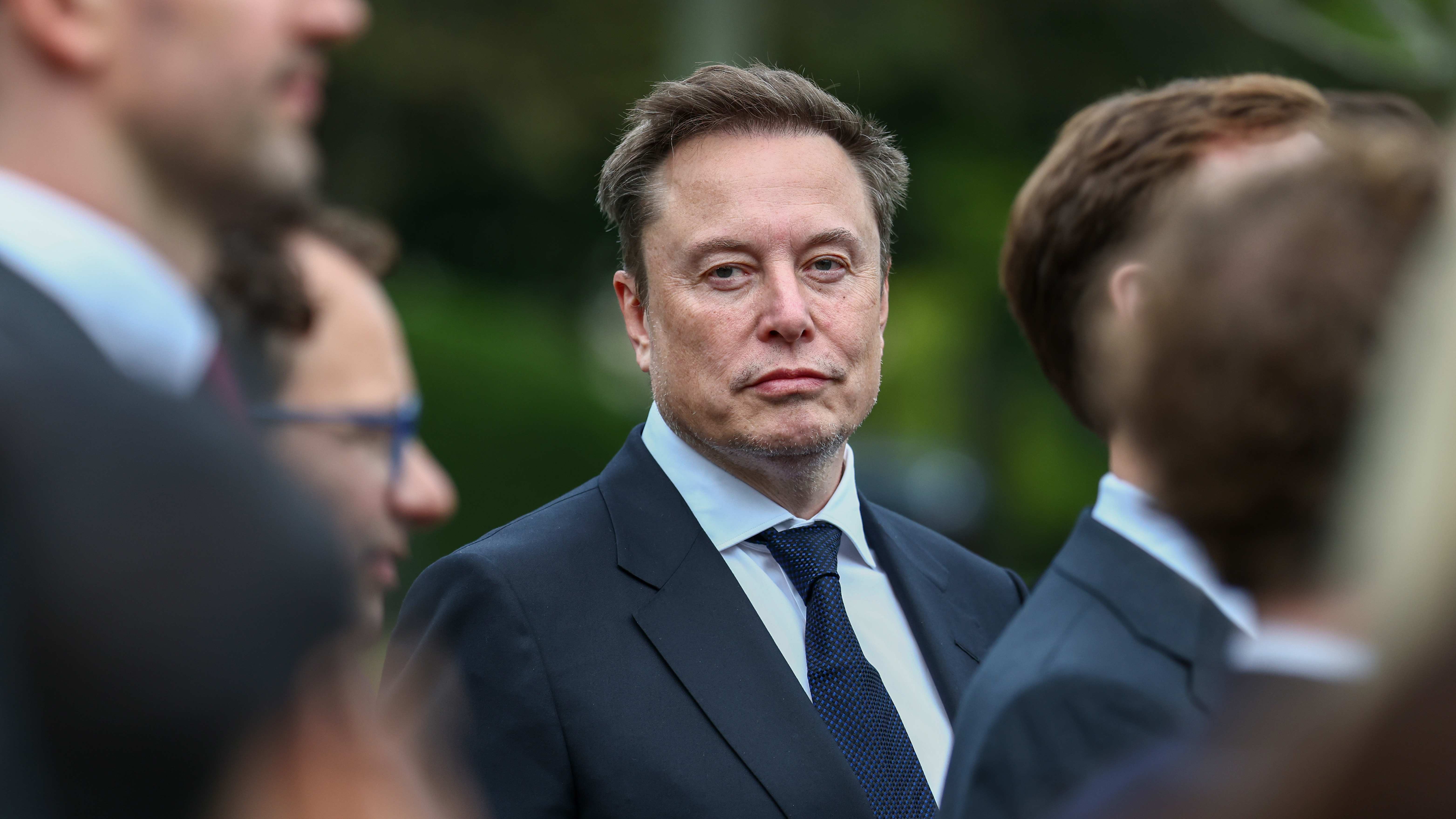
The simple reason JPM thinks SpaceX is going to triple |
It seems like the June 12 IPO was only yesterday. (Liu Yanan/Xinhua via Getty Images) |
SpaceX (SPCX) is on a roll. After reporting earnings for the second time as a public company, turning a profit and showing massive AI revenue, investors are pouring in, driving a 10% gain on Wednesday, and earning stock upgrades from Wall Street. One analyst note stood out among a strong field: JPMorgan's massive bull thesis. It's common enough for CEO Elon Musk to bet big on himself. But analyst Doug Anmuth laid out another optimistic case, more than doubling his price target to $500 from $240, implying an upside of more than 200% from Wednesday's prices. The reason why? In a sentence: "No other company is as well positioned to go after the combined anticipated [total addressable market] of $28T+," Anmuth wrote in a note after earnings. In other words, SpaceX is going after everything. Musk’s (current) favorite corporate child has already gone beyond rockets and satellites into telecommunications, along with a complete chip to data center to Grok vertical integration AI, which has overtaken the rest of SpaceX's operations to become its biggest business by revenue. Alone, these businesses would be huge. Together, they approach a quarter of US GDP. Just imagine if robotaxi and robotics markets get tacked on to that. |
|
|
Meta and Tesla add to a potential theme this quarter: Capex discipline |
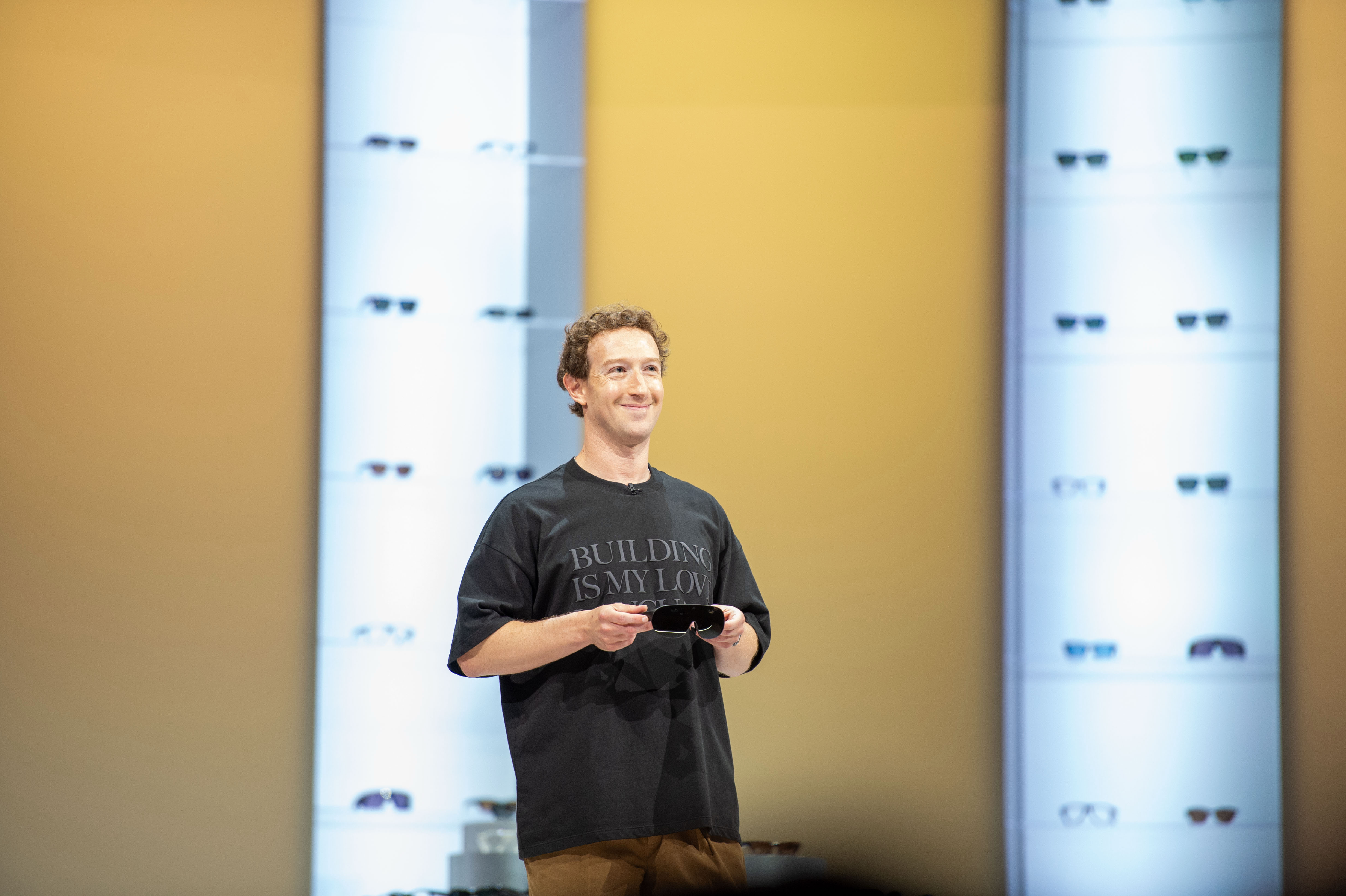
(Photo by Andrej Sokolow/picture alliance via Getty Images) |
Meta and Tesla have now entered the earnings chat, picking up where SpaceX left off. Meta came in hot for its quarterly results, riding the wave of its Muse AI agent success and moving up its earnings reveal a week on the calendar. Though it was slapped with a $25 billion fine by a New Mexico judge mere hours before it opened its books, the strong results were enough to see the stock (which is splitting 2-1) rise in after-hours trading. Beating on revenue and income is table stakes for these companies. But investors may be delighted by Mark Zuckerberg and co. mostly leaving capex alone — only adjusting the lower figure in its range from $130 billion to $135 billion and leaving the upper band of $145 billion untouched. On the back of SpaceX's capex coming in lower than expectations, we may be getting a trend of capex discipline. On the earnings call, Zuckerberg added a few other key things we'll note: Threads is beating X, Muse is mostly for shopping and is set to eclipse other Meta products' revenue per user, and Zuckerberg won't move out of California over the wealth tax on the November ballot. Meanwhile, Tesla, which is trading more like SpaceX than a car company, showed better-than-expected results, with the two critical metrics (free cash flow and capex spending) coming in on the right side of Wall Street's hopes. The stock rose modestly in after-hours trading, but with SpaceX stealing some of Tesla's Musk-powered thunder by addressing merger rumors, the biggest question was already answered (for now). We all await the results of the exploratory committees' merger recommendations. |
|
|
Nvidia's new container-sized data center shows a product-first strategy to keep demand strong |
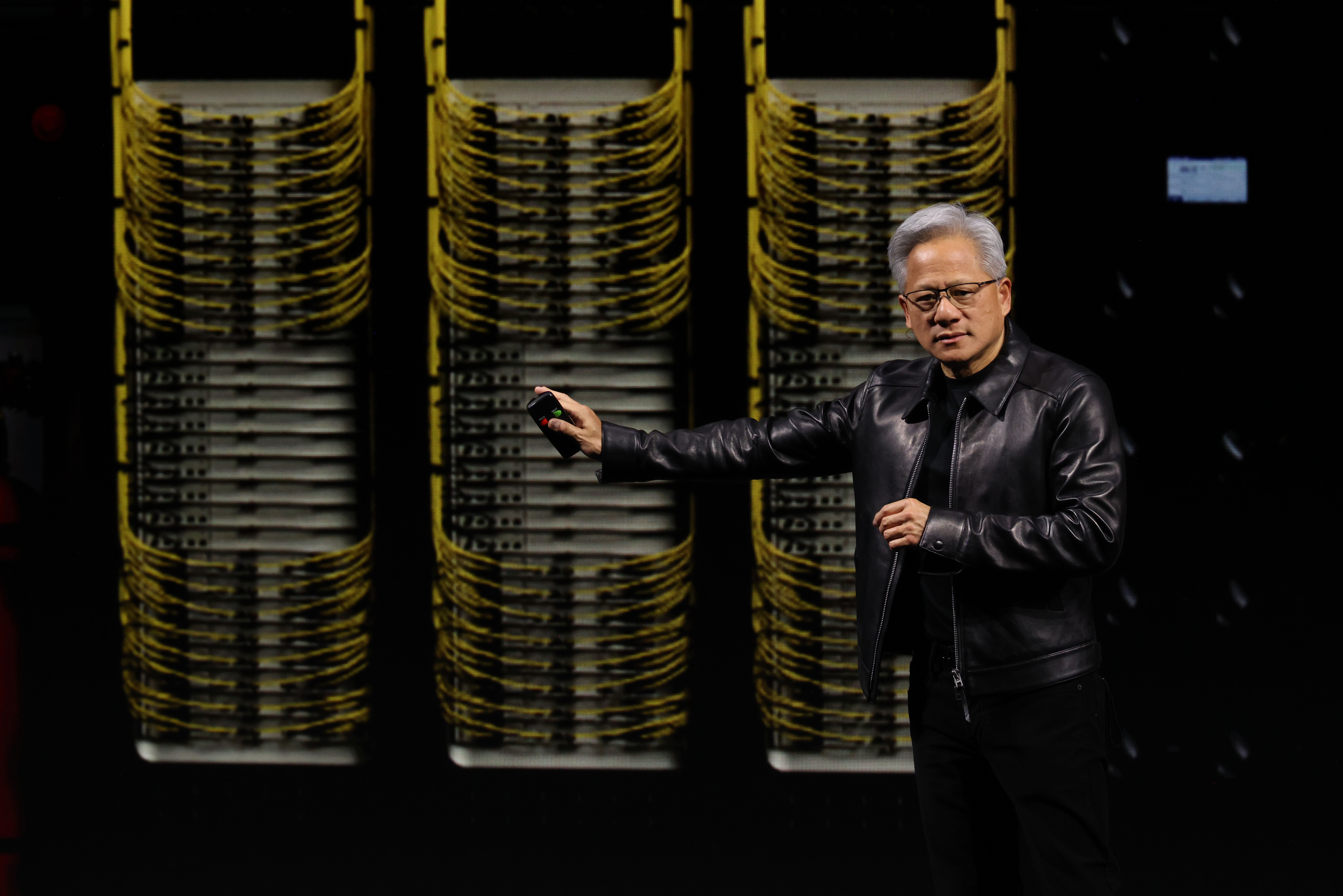
ensen Huang, CEO of NVIDIA, presents new NVIDIA Vera Rubin DSX Pod Full-Stack Modular AI Factory as he gives a keynote address at the Berlin GPU Technology Conference (GTC) on October 21, 2026 in Berlin, Germany. (Sean Gallup/Getty Images) |
Deirdre Bosa's big Jensen Huang interview at Nvidia's GTC event in Berlin hit on a ton of stuff, from data center clashes with neighbors to AI safety to a shifting landscape of bottlenecks. The whole thing is here, and we recommend watching it. But one thing that stood out to us amid a slew of news from the company's event was its evolving vision about what a data center is, where it is, and how big it is. Getting massive amounts of compute online has been the main theme of the past few years of AI build-out. It's expensive, difficult, and uncertain, with plenty of potential roadblocks. Nvidia's new shipping container-sized mini data center, the DSX POD, is apparently able to get online in mere weeks, giving companies the ability to bridge a gap while a larger data center is being constructed. Not only does it have the potential to deal with time bottlenecks like power, water (it can dry cool too), and zoning to make the path to revenue quick, this form factor could also be desirable for smaller companies on its own. This flexible solution showcases Nvidia's ability to find new, creative vehicles to deploy its chips. And keep demand high. |
|
|
| | Popular on Yahoo Finance | |
|
|
Netflix is losing viewers — but they're still subscribed |
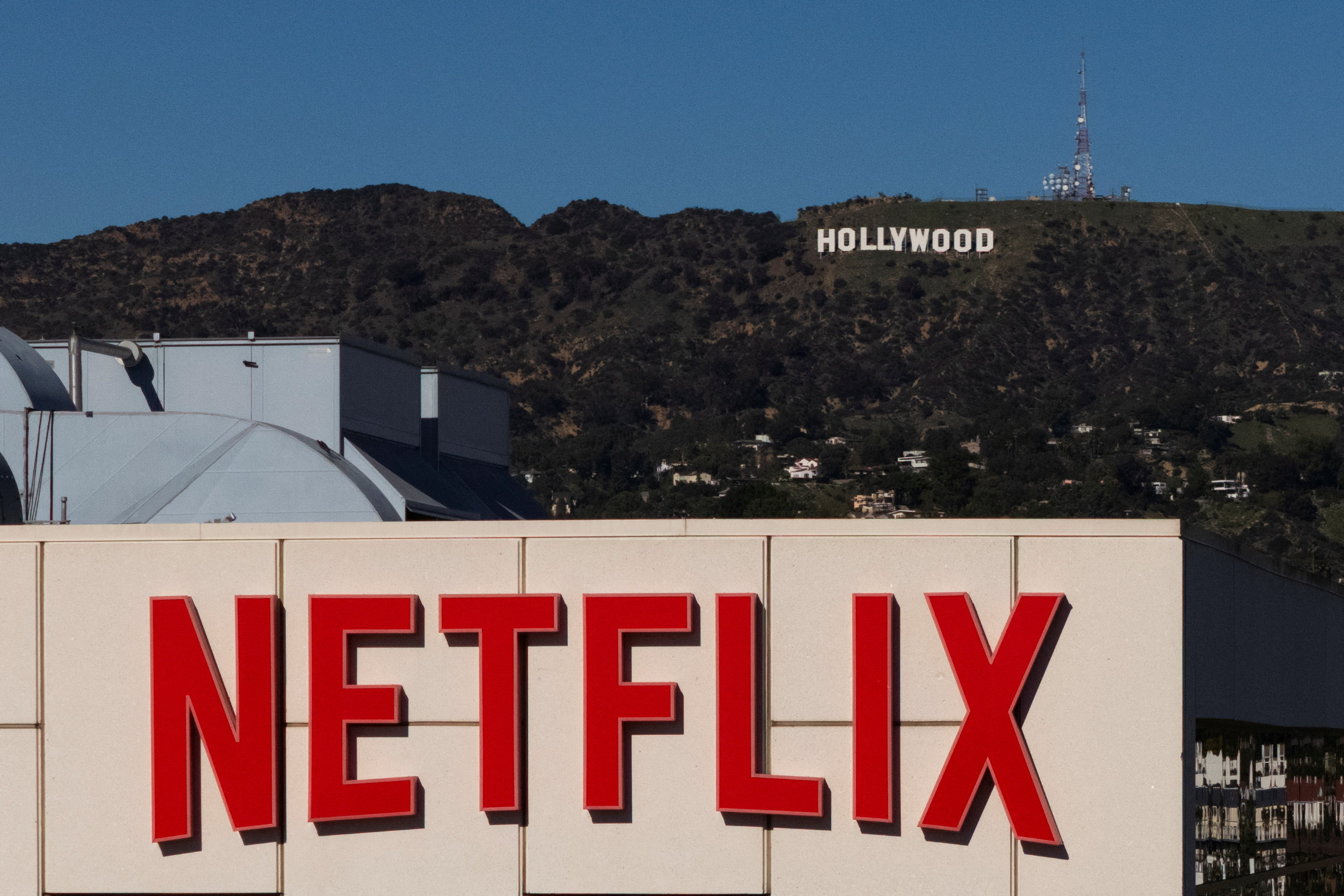
A drone view shows the Netflix logo on one of their buildings in the Hollywood neighborhood of Los Angeles, California, December 8, 2025. REUTERS/Daniel Cole | Netflix (NFLX) has a unique problem: subscription zombies. The company is seeing sagging engagement in the US, while also claiming an industry-low churn rate. People aren't leaving the service, but they aren't watching it enthusiastically, either. If the company's stock price — down 30% this year — is any indication, investors are fed up. But the steep fall from prior highs is, given the right insights and conviction, another buying opportunity. That's how analysts at Deutsche Bank see things. In a note published Wednesday, Bryan Kraft made the case for buying the dip. After reporting third quarter earnings, Netflix shares fell to their lowest level in more than two years as the streaming giant missed estimates on the current quarter's revenue outlook and the full-year ad revenue forecast. As management acknowledged there's room for its US business to do better, Kraft took a contrarian take. Netflix viewing continues to grow outside the US, and in every region churn is down compared to last year, despite recent price hikes, he said. "We found management's commentary on churn, international viewing, new content leadership, and their long-term growth outlook all pretty encouraging," he said. The market has fixated on sagging time spent watching and a lackluster slate of content. But Kraft believes this stems from a weaker lineup compared to last year, rather than a deeper decline in quality. Netflix's stock market struggle and its engagement problem arrive with a dose of irony. After all, Paramount's (SKYD) stated justification for pursuing Warner Bros. was to get big enough to compete with Netflix. But Netflix is looking less like an indomitable tech giant and more like a beleaguered studio struggling to convince American audiences that it isn't a slop factory. |
|
|
 | Earnings and economic calendar | |
- Economic data: Initial jobless claims, week ended Oct. 17 (199,000 prior); Continuing claims, week ended Oct. 10 (1.71 million prior); Kansas City Fed manufacturing activity, October (14 prior)
- Earnings calendar: Procter & Gamble (PG), Union Pacific (UNP), Southern Copper Corporation (SCCO), Western Digital (WDC), Valero Energy (VLO), Lockheed Martin (LMT), Newmont Corporation (NEM), Spotify (SPOT), Blackstone (BX), Comcast (CMCSA), Barclays (BCS), Norfolk Southern (NSC), Bloom Energy (BE), Honeywell International (HON), Comfort Systems USA (FIX), PG&E (PCG), CBRE Group (CBRE), Roper Technologies (ROP), Deckers Outdoor Corporation (DECK)
|
- Economic data: S&P Global US manufacturing PMI, October preliminary reading (55.5 expected, 55.9 prior); S&P Global US services PMI, October preliminary reading (57.7 expected, 58.8 prior); S&P Global US composite PMI, October preliminary reading (58.4 prior); Kansas City Fed services activity, October (0 prior); U. Mich. sentiment, October final reading (46.3 expected, 46.3 prior); U. Mich. current conditions, October final reading (44.7 prior); U. Mich. expectations, October final reading (47.3 prior); U. Mich. 1-year inflation, October final reading (+4.7% prior); U. Mich. 5-10 year inflation, October final reading (+3.5% prior)
- Earnings calendar: American Express (AXP), Eni S.p.A. (E), Illinois Tool Works (ITW), SLB N.V. (SLB), Infosys (INFY), First Citizens BancShares (FCNCA), Rogers Communications (RCI), Dr. Reddy's Laboratories (RDY), Booz Allen Hamilton (BAH), Autoliv (ALV), Balchem Corporation (BCPC)
|
|
|
Yahoo Finance App: Portfolio performance, news and alerts, stock data and all you need in a finance app. Download now. |
|
|
If you like what we do, please forward us to a friend. If you're not already subscribed, sign up right here. |
|
|
|